| Type of Procedure |
Reason for Procedure |
| Traditional LASIK |
Standard laser eye surgery for most refractive errors |
| Photorefractive Keratectomy (PRK) |
Flap-free option for thinner corneas or active lifestyles |
| Refractive Lens Exchange |
Vision correction option for older patients or higher prescriptions |
Traditional LASIK
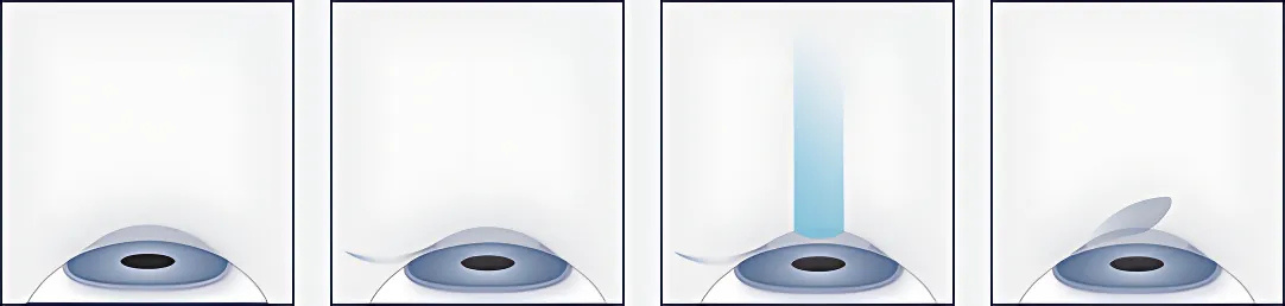
Traditional LASIK uses a microkeratome blade to create the corneal flap before the excimer laser reshapes the tissue underneath. It remains a widely trusted laser vision correction procedure with excellent results for people who have moderate nearsightedness, farsightedness or astigmatism. Recovery is quick, and most patients return to normal activities within a day or two.
Photorefractive Keratectomy (PRK)
Photorefractive keratectomy removes the outer layer of the cornea instead of creating a flap, then uses the excimer laser to reshape the tissue underneath. PRK is often recommended for patients with thinner corneas or those who play contact sports where a flap could be at risk of injury. Healing takes longer than LASIK, but the procedure yields similar results.
Refractive Lens Exchange
Refractive lens exchange replaces your natural lens with an artificial one, similar to cataract surgery. This option works well for people over 45 or those with higher refractive errors that LASIK cannot correct and can eliminate the need for cataract surgery in the future.


 Take the Next Step. Request a Surgical Consultation.