

How Can You Tell if You Scratched Your Cornea?
The Short Answer: The main signs to watch for if you’ve scratched your cornea include eye pain, a gritty sensation like something is stuck in your eye, light sensitivity, excessive tearing, and blurry vision. A scratched cornea, medically known as a corneal abrasion, often causes discomfort that worsens with blinking. While minor abrasions may heal within a few days, it’s essential to see an eye doctor to avoid complications such as infections or corneal ulcers.
What Is a Corneal Abrasion?
A corneal abrasion is a scratch on the surface of your cornea, which is the clear, dome-shaped tissue covering the front of your eye. The cornea is highly sensitive, containing more nerve endings than almost any other body part, so even a small scratch can be intensely painful.
Corneal abrasions range from minor injuries that heal quickly to deeper abrasions that require medical attention. The severity depends on the scratch’s depth and whether any foreign material is embedded in the eye.
Common Causes of a Scratched Cornea
Understanding how corneal injuries happen can help prevent them. The most common causes of corneal scratches include:
- Foreign objects in the eye: Dust, sand, metal shavings, and other small particles can scratch the cornea if they get trapped under your eyelid or come in direct contact with the eye.
- Contact lens problems: Wearing contact lenses too long, sleeping in contacts not designed for overnight wear, or inserting damaged lenses can cause a corneal scratch. Poor lens hygiene is also a major contributor to corneal abrasions.
- Eye rubbing: Rubbing your eyes vigorously, especially when a foreign object is present, can drag debris across the cornea, causing injury.
- Accidental pokes: Fingernails, makeup applicators, or other objects near the eye can accidentally scratch the cornea.
- Sports and recreation: Sports equipment, branches from hiking, or flying debris during outdoor activities can cause corneal injuries, especially if eye protection isn’t worn.
- Workplace hazards: Jobs involving metalwork, woodworking, or environments with airborne particles increase the risk of corneal abrasions if protective eyewear isn’t used.
Signs and Symptoms of a Corneal Scratch
So, how can you tell if you’ve scratched your cornea? Here are the most common symptoms:
- Eye pain: Sharp, immediate pain in the affected eye is usually the first sign. The discomfort can range from mild irritation to intense pain, depending on the severity of the scratch.
- Foreign body sensation: You may feel like something is stuck in your eye, even after flushing it with water or saline.
- Light sensitivity: Bright lights may cause discomfort or pain in the scratched eye. This can make it difficult to be in well-lit rooms or outdoors.
- Excessive tearing: Your eye may produce more tears as it tries to flush out irritants and protect the damaged area.
- Blurry vision: The scratch can temporarily blur your vision, particularly if it’s in the center of your cornea.
- Redness: The white part of your eye may appear red or bloodshot due to inflammation and irritation.
- Pain with blinking: Blinking can worsen the discomfort since your eyelid moves over the damaged area.
- Headache: Some people may experience headaches from the strain caused by eye pain and light sensitivity.
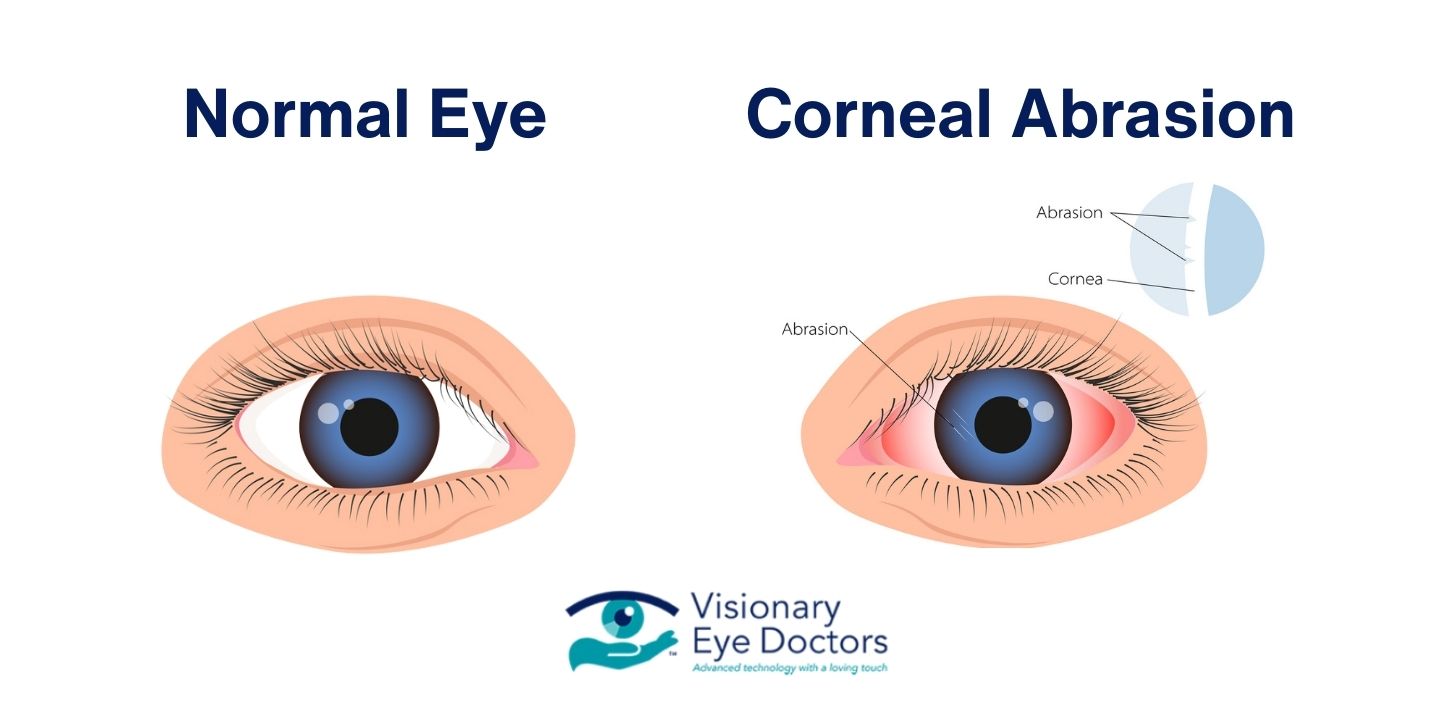
Minor Abrasion vs. Serious Corneal Injury
A minor scratch may cause mild to moderate discomfort and typically heals within a few days. However, larger abrasions or deeper injuries can lead to severe pain, vision problems, and may require medical treatment to avoid complications. If symptoms are intense or don’t improve within 24 hours, it’s likely a more serious injury.
What to Do If You Think You Scratched Your Cornea
If you think you’ve scratched your cornea, here’s what to do:
- Don’t rub your eye: Rubbing your eye can push a foreign object deeper or worsen an existing scratch.
- Rinse gently: Flush the eye with clean water or saline to remove debris. Tilt your head so the affected eye is down and let the water wash over it.
- Blink frequently: Blinking can help flush out small particles and spread your tears across the eye.
- Lift the eyelid gently: If debris is trapped under your eyelid, gently pull the lid away from your eye and look in different directions to dislodge it.
- Remove contact lenses: Take out your contact lenses immediately and avoid putting them back in until you’ve seen an eye doctor.
- Protect your eye: If light sensitivity is severe, wear sunglasses and avoid touching or pressing on your eye.
What Not to Do
Don’t use tweezers or cotton swabs to remove anything from your eye, since that can make the injury worse. Avoid eye drops unless your healthcare provider prescribed them, and don’t patch your eye tightly unless your doctor tells you to.
When to See an Eye Doctor
You should consult an eye doctor if:
- Pain persists after rinsing
- Blurry vision or vision problems become significant
- Symptoms worsen over time
- You see a foreign object embedded in your eye
- The injury was caused by a high-speed object, metal or a chemical
- You notice signs of infection, such as discharge or increasing redness
- The injury involves a child’s eye
For serious injuries or if you can’t reach your doctor, head to the emergency room. Untreated corneal scratches can develop into infections like corneal ulcers, which can lead to permanent vision loss.
How Eye Doctors Diagnose a Corneal Abrasion
An eye doctor will use a slit lamp to examine your eye under magnification and light. They may apply fluorescein dye, which turns green under blue light, helping them see even tiny abrasions. The doctor will check for any foreign particles, assess the depth of the injury, and examine for signs of infection to determine the best course of treatment.
Treatment Options for Corneal Abrasions
Treatment depends on the severity of the scratch:
- Antibiotic eye drops/ointment: These help prevent infection while the cornea heals.
- Pain management: Over-the-counter pain relievers can manage discomfort. Prescription eye drops may also be provided.
- Bandage contact lens: For larger abrasions, a special lens may be used to reduce pain and protect the eye during healing.
- Lubricating eye drops: These keep the eye moist and comfortable as it heals.
The Healing Process
Most minor corneal abrasions heal within 24-72 hours. Larger abrasions may take a few days to a week to heal completely. Be sure to follow your doctor’s instructions and attend any follow-up appointments to monitor healing.
Corneal Abrasion vs. Pink Eye
Although both conditions can cause redness and irritation, pink eye (conjunctivitis) is typically accompanied by itching and discharge, while a corneal abrasion results in sharper pain, light sensitivity, and a history of trauma to the eye. If you’re unsure, see your eye doctor for a diagnosis.
Preventing Corneal Scratches
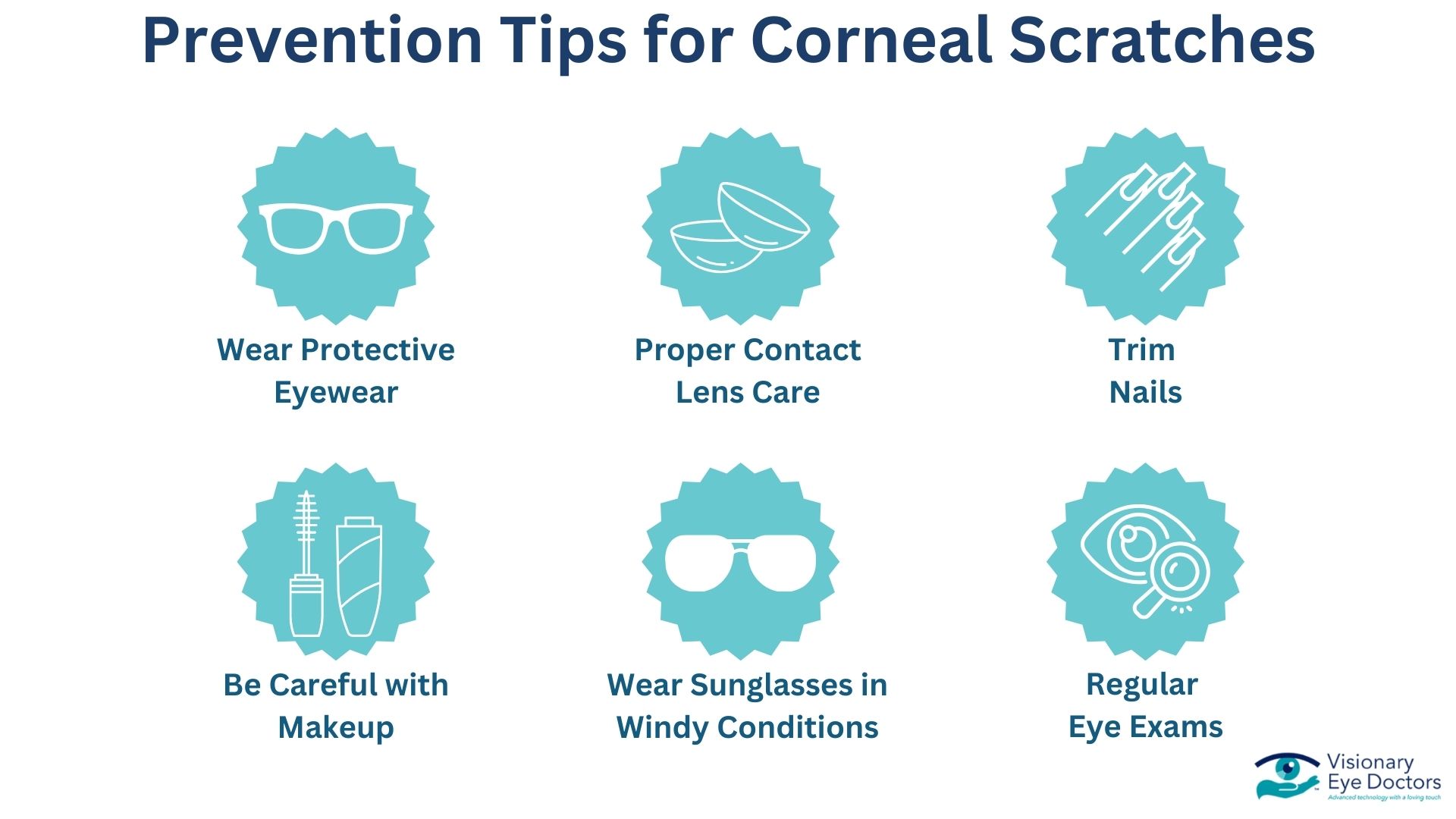
You can reduce the risk of corneal abrasions by taking the following precautions:
- Wear protective eyewear for work and sports
- Practice proper contact lens care
- Keep nails trimmed to prevent accidental scratches
- Be careful with eye makeup and avoid sharing cosmetics
- Wear sunglasses in windy conditions
- Schedule regular eye exams to catch any issues early
Protect Your Vision with Expert Care at Visionary Eye Doctors
A scratched cornea can be painful, but with the right treatment, most abrasions heal fully. Recognizing symptoms early and seeking professional care is key to preventing complications and maintaining healthy vision. If you’re experiencing symptoms of a corneal scratch, don’t wait. Schedule an appointment with Visionary Eye Doctors today for the expert care your eyes deserve. For more corneal information, visit our Corneal Care Center page.

