When Should Kids Get an Eye Exam?
The Short Answer: Children should have their first eye exam around 6 months of age, another between ages 3 and 5, and then annual eye exams once they start school. Early detection of vision problems supports learning, development, and long-term eye health.
Parents often wonder if their child needs a pediatric eye exam, especially when the school nurse already runs basic vision screenings. The truth is that screenings catch only a fraction of vision issues. A pediatric eye exam looks much deeper at your child’s eyesight, eye coordination, and overall eye health. Catching a refractive error or lazy eye early can change a child’s whole school experience.
Recommended Eye Exam Schedule by Age
The American Optometric Association suggests a specific timeline for children’s eyes. Here is what regular pediatric eye exams look like at each stage.
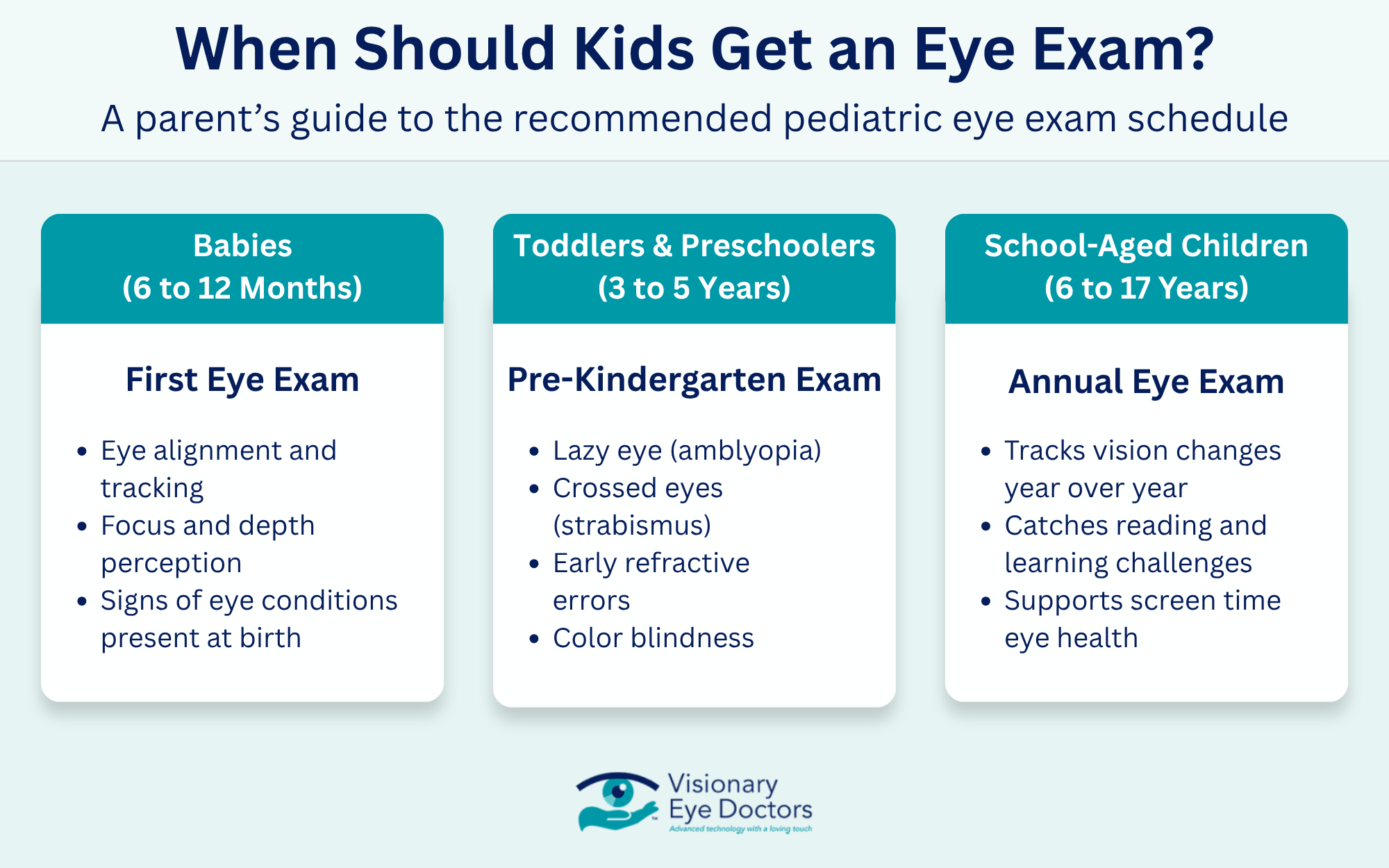
Babies (6 to 12 Months)
A baby’s eyes develop quickly during the first year. A first eye exam at this age checks:
- Eye alignment and tracking
- Focus and depth perception
- Signs of any eye conditions present at birth
Toddlers and Preschoolers (3 to 5 Years)
Between the ages 3 and 5, kids should have another exam before kindergarten. This visit looks for:
- Lazy eye (amblyopia)
- Crossed eyes (strabismus)
- Early refractive error, like nearsightedness or farsightedness
- Color blindness
School-Aged Children (6 to 17 Years)
Once a child starts school, an annual eye exam is the standard recommendation. Reading, writing, and screen use all place new demands on a child’s vision, so regular exams help track changes year over year.
Why a School Vision Screening Is Not Enough
Many parents assume the quick chart test at school covers everything. Basic vision screenings mostly measure visual acuity, which means how clearly a child can see letters on a chart from across the room. They miss a lot.
A full pediatric eye exam also checks:
- Binocular vision (how well the eyes work together)
- Depth perception
- Eye focusing and tracking
- Eye health inside and out
- Visual skills tied to reading and learning
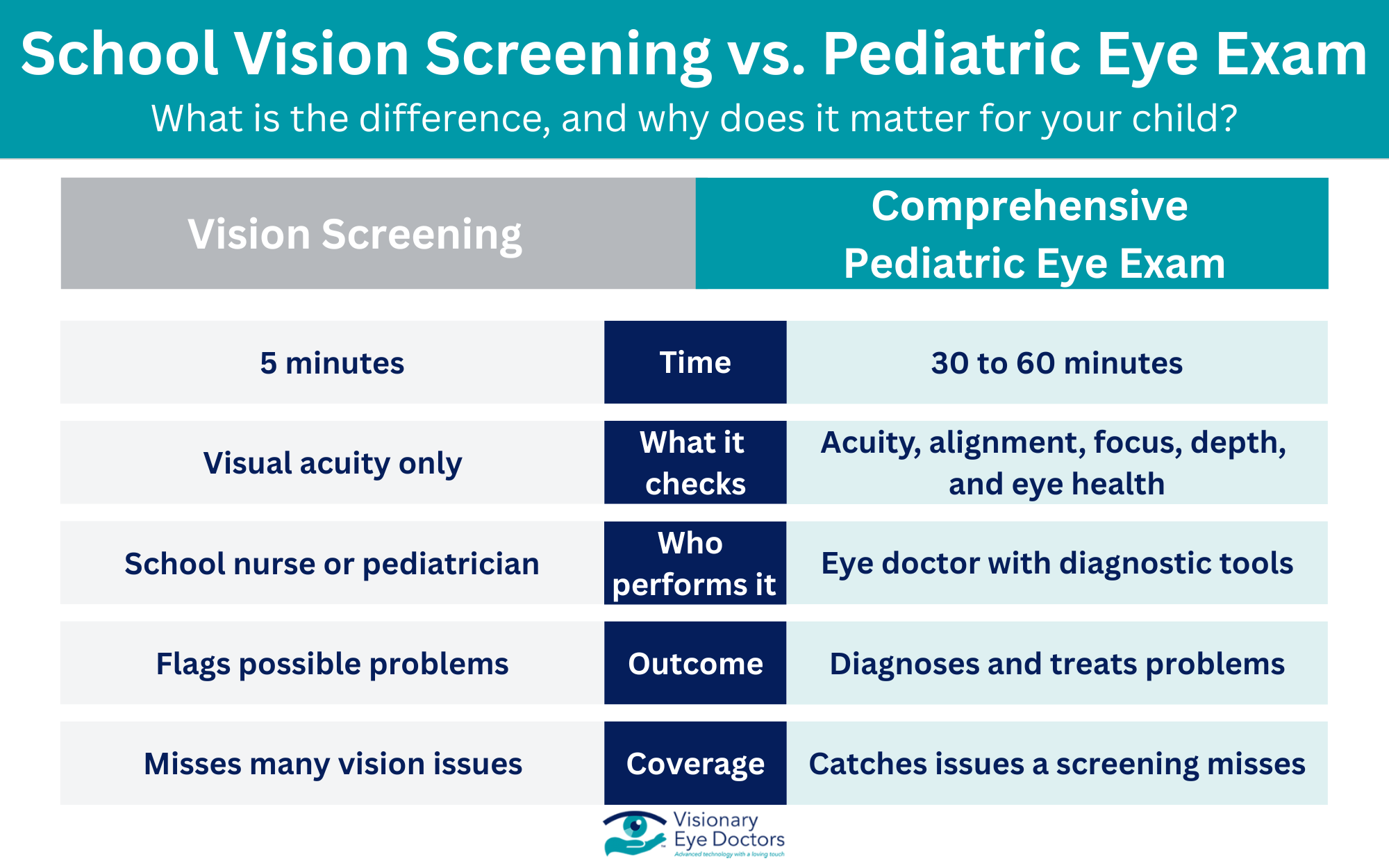
The American Academy of Ophthalmology notes that a child can pass a screening and still have a real vision problem affecting school performance.
Signs Your Child May Have a Vision Issue
Younger kids often do not realize their eyesight is not normal. They assume everyone sees the way they do. Watch for these signs:
- Squinting or tilting the head to see
- Sitting very close to the TV or holding devices near the face
- Frequent eye rubbing
- Trouble reading or skipping lines while reading
- Short attention span during close-up tasks
- Headaches after schoolwork
- Avoiding reading, puzzles, or other detail-heavy activities
- One eye that drifts or turns inward or outward
Many obvious symptoms show up at home before they show up in the classroom. If you notice any of these, schedule an appointment today rather than waiting for the next checkup.
Common Eye Problems in Children
A kid’s eye exam can pick up several conditions. Some of the most common include:
| Condition | What It Is |
| Refractive error | Nearsightedness, farsightedness, or astigmatism |
| Amblyopia (lazy eye) | One eye does not develop normal vision; affects 2 to 3 percent of children |
| Strabismus | The eyes do not line up together |
| Convergence insufficiency | The eyes struggle to focus together on near objects |
| Color blindness | Trouble telling certain colors apart |
Early detection matters most for lazy eye. The visual abilities of children develop fastest before age 7, so treatment works best when started young. Vision therapy, corrective lenses, or patching can correct many of these eye problems when caught early.
What Happens at a Pediatric Eye Exam
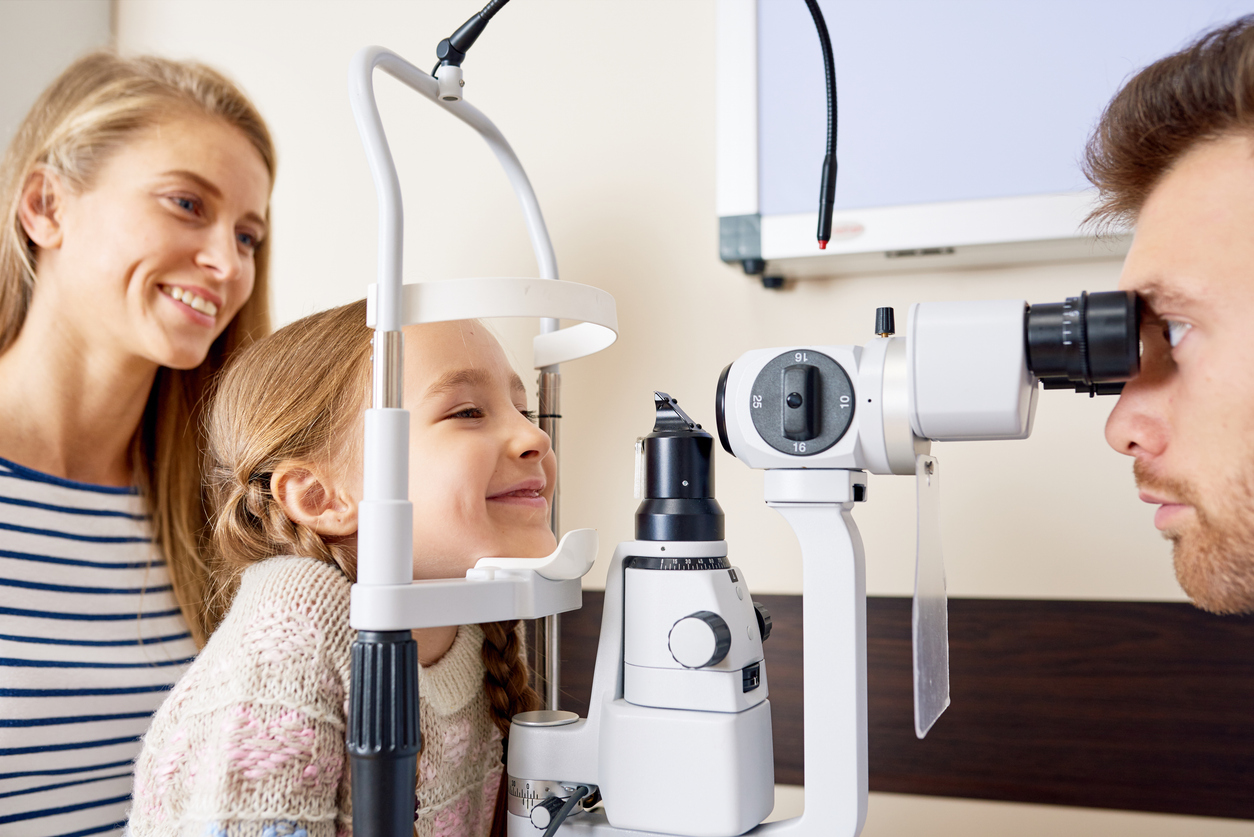
Parents sometimes worry their child is too young for a real exam. A pediatric optometrist or pediatric ophthalmologist uses age-appropriate tools, including pictures and lights, for kids who cannot read yet.
A typical visit includes:
- A review of family eye history and any concerns
- Tests for visual acuity using letters, shapes, or pictures
- Checks for eye alignment, focusing, and depth perception
- A look at eye health using gentle lights and lenses
- A discussion of glasses, contact lenses, or vision therapy if needed
The whole exam usually takes 30 to 60 minutes.
Screen Time and Your Child’s Eyes
Screen time has changed the way children’s eyes work day to day. Long hours on phones, tablets, and laptops can lead to:
- Eye strain and tired eyes
- Dry eyes from less blinking
- Headaches
- Faster progression of nearsightedness in some kids
A simple habit called the 20-20-20 rule helps. Every 20 minutes, look at something 20 feet away for 20 seconds. Outdoor play also supports healthy vision in young children. Even with good habits, regular exams remain the best way to track changes in a child’s eye health.
When Do Kids Need Glasses or Contact Lenses?
If an exam shows a refractive error, your eye doctor will talk through vision correction options. Glasses are usually the first step for younger children, and frames have come a long way in terms of durability and style. Older children and teens who are responsible enough to handle daily care may move into contact lenses. The right choice depends on lifestyle, prescription, sports involvement, and how well a child can stick to a cleaning routine.
For kids with stronger prescriptions or fast-changing eyesight, your eye doctor may also discuss myopia management options that can slow the progression of nearsightedness over time.
Supporting Your Child’s Vision Starts Here
Regular eye exams give kids their best shot at clear vision, strong school performance, and lifelong eye health. Starting at 6 months, then again before kindergarten, and once a year through the school years, these visits catch problems that basic vision screenings miss. From lazy eye to early refractive errors, early detection often makes treatment simpler and more effective.
Visionary Eye Doctors provides pediatric eye exams for families throughout Washington, DC and Maryland. Our team examines your child’s eye health, eye coordination, and visual skills using advanced diagnostics, and we take the time to explain what we find in language that makes sense.
Help your child start the school year with clear vision. Book an appointment today with our team.