
Allergies and Itchy Eyes: Causes, Triggers, and What Actually Helps
The Short Answer: Eye allergies happen when your immune system overreacts to airborne allergens like pollen or pet dander, triggering symptoms like itchy, watery, or red eyes. Most cases respond well to the right treatment, but knowing what’s causing your symptoms is the first step to real relief.
If your eyes are constantly itchy, watery, or irritated during allergy season, you’re not alone. Eye allergy symptoms affect millions of people every year, and they can make daily life genuinely miserable. The tricky part is that not all red, irritated eyes are the same. Understanding what’s actually going on helps you treat the right thing, not just the symptom.
What Is an Eye Allergy?
An eye allergy, also called allergic conjunctivitis, happens when your immune system reacts to something that isn’t actually a threat. When an allergen lands on the surface of your eye, your body releases histamine from mast cells. That chemical response is what causes swelling, redness, and that relentless itchy eye feeling.
There are a few different types:
- Seasonal allergic conjunctivitis is the most common. It flares during pollen season, usually in the spring and fall.
- Perennial allergic conjunctivitis happens year-round, typically triggered by indoor allergens.
- Atopic keratoconjunctivitis is a more serious, chronic form that can affect your cornea if left untreated.
Common Allergens and Triggers
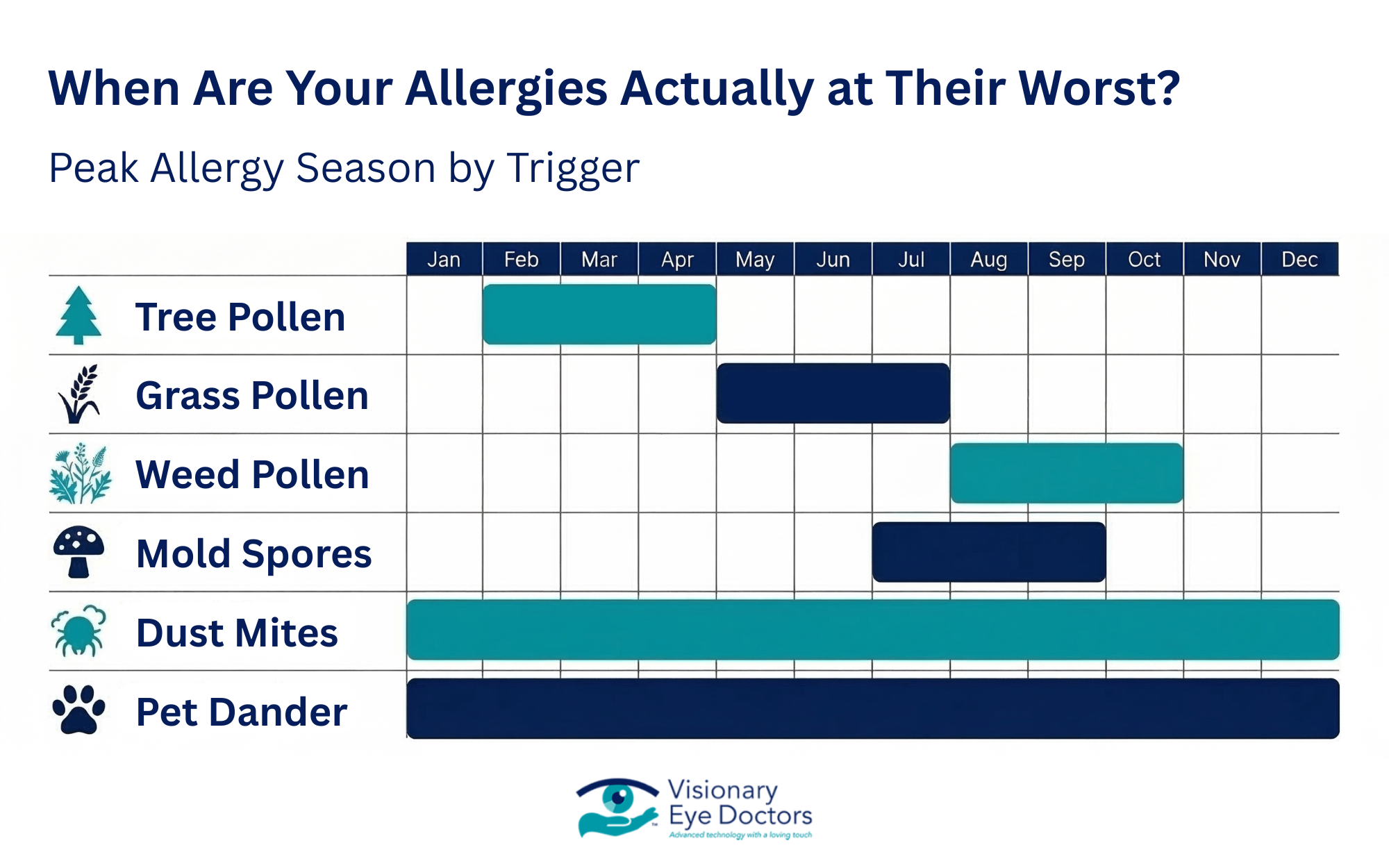
Eye allergy symptoms can be triggered by both outdoor and indoor sources. The most common allergen categories include:
Outdoor triggers:
- Tree, grass, and weed pollen (the main driver of hay fever and seasonal allergy flare-ups)
- Mold spores in damp outdoor environments
Indoor triggers:
- Pet dander from cats, dogs, and other animals
- Dust mites in bedding, carpets, and upholstered furniture
- Mold growing in humid areas of your home
During high pollen count days, symptoms tend to spike. The Asthma and Allergy Foundation of America tracks seasonal allergy data and pollen forecasts that can help you plan outdoor time during peak pollen season.
Eye Allergy vs. Pink Eye vs. Dry Eye
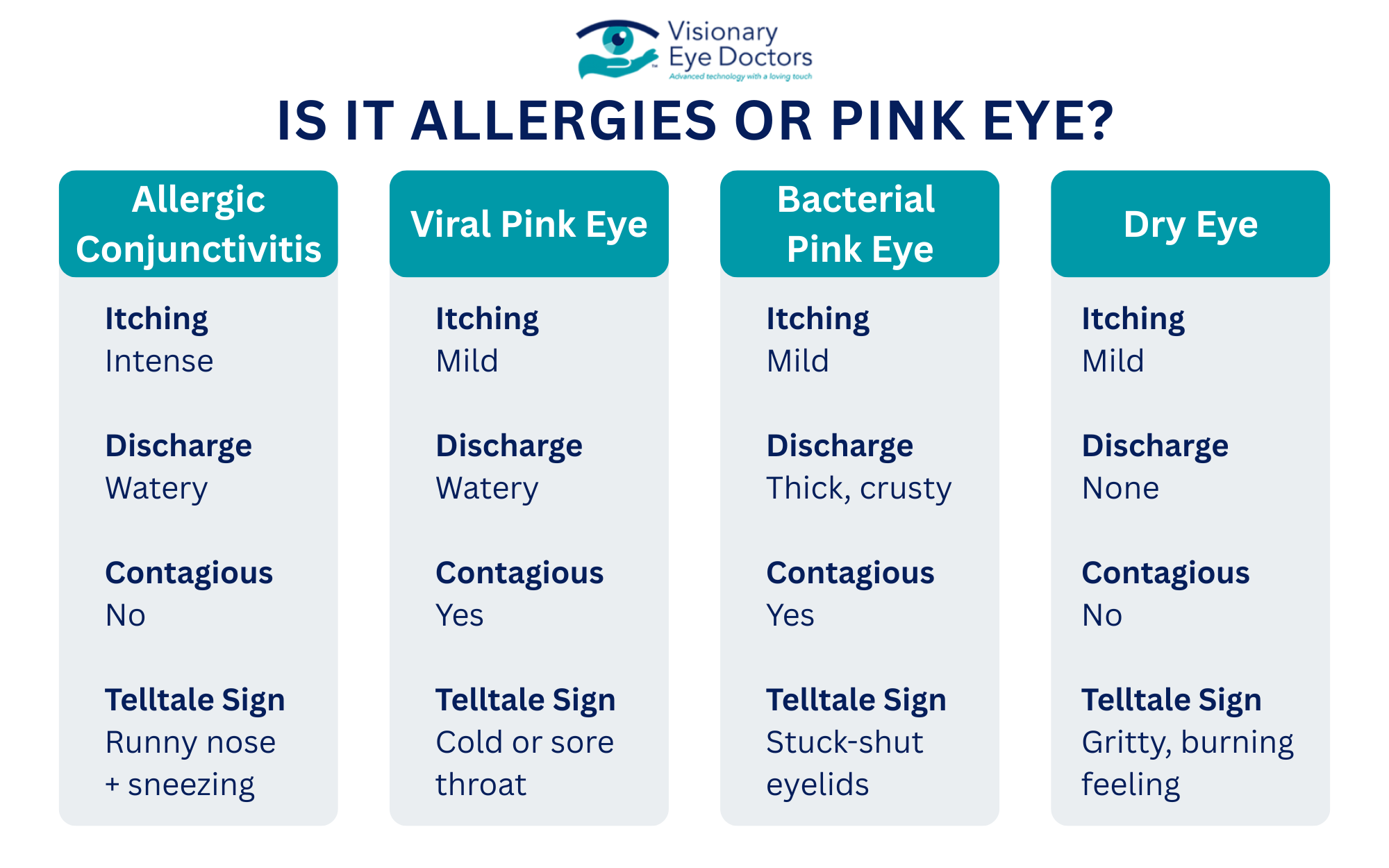
One of the most common points of confusion is telling eye allergy symptoms apart from other conditions with similar symptoms.
Allergic Conjunctivitis
- Itchy eyes, watery eyes, redness, watery discharge
- Not contagious
- Almost always paired with an itchy nose, runny nose, or sneezing
Viral Conjunctivitis (Pink Eye)
- Red eye, watery, burning sensation
- May come with a sore throat or cold-like symptoms
- Contagious
Bacterial Infections (Pink Eye)
- Thick or yellow-green discharge, crusty eyelids, red eye
- Contagious
- Requires antibiotic treatment
Dry Eye Syndrome
- Burning, gritty feeling, fluctuating vision
- Not contagious
- Can overlap with and worsen allergy symptoms
That last point matters. Some people deal with both dry eye and eye allergies at the same time, and the symptoms overlap in ways that make it easy to misread what’s happening. An eye doctor can help sort out what’s actually going on.
What Actually Helps For Allergies
Antihistamine Eye Drops
Antihistamine eye drops are usually the first line of defense for allergic symptoms. They work directly at the source by blocking histamine at the mast cell level, cutting down on itching and redness quickly. Many are available over the counter and start working within minutes.
Artificial Tears
Artificial tears help rinse allergens off the surface of your eye. They reduce irritation and keep the eye hydrated, which matters especially if you also deal with dry eye. Use them throughout the day as needed, and refrigerate them for extra soothing relief.
Oral Antihistamines
An oral antihistamine can help manage the full picture of allergy symptoms, including itchy eyes, itchy nose, runny nose, and sneezing. Keep in mind that some oral medications can dry out your eyes, which may worsen discomfort for people who already deal with dry eye syndrome.
What to Avoid During Allergy Season
Small habit changes can make a real difference:
- Keep windows closed on high pollen count days
- Shower after being outside to rinse off pollen
- Wash bedding frequently to reduce dust mite exposure
- Use a damp cloth to wipe down surfaces instead of dry dusting
- Avoid rubbing your eyes, which releases more histamine and makes itching worse
Contact Lenses and Eye Allergies
Wearing contact lenses during allergy season adds another layer of irritation. Airborne allergens stick to lens surfaces and sit directly against your eye. A few things that help:
- Switch to daily disposable lenses during peak pollen season
- Talk to your eye doctor about allergy-safe lens options
- Follow your replacement schedule strictly
- Consider glasses on high-symptom days
If contact lenses consistently make your eye symptoms worse, a proper contact lens exam can identify whether fit, lens material, or care routine is the issue.
Allergy Shots
For people with moderate to severe symptoms that don’t respond well to eye drops or oral medications, allergy shots (immunotherapy) can gradually reduce how strongly your immune system reacts to a specific allergen. This is a longer-term treatment managed through an allergist, but it can significantly reduce how much your symptoms affect daily life over time.
When Symptoms Point to Something More Serious
Most eye allergy cases are annoying but not dangerous. However, there are situations where you should see an eye doctor rather than waiting it out:
- Symptoms that don’t improve with over-the-counter treatment
- Eye pain or significant light sensitivity
- Vision changes
- Thick or unusual discharge, which may signal bacterial infections
- Symptoms that look like allergic conjunctivitis but don’t follow a seasonal pattern
Atopic keratoconjunctivitis, for example, can cause corneal damage without proper treatment. This more severe form of eye allergy requires close monitoring by an eye doctor to prevent long-term complications. If your eye symptoms feel more intense than typical seasonal allergy flare-ups, an exam can rule out something that needs more targeted care.
The Bottom Line on Eye Allergy Relief
Eye allergy symptoms are common, but they don’t have to take over your daily life. The right approach depends on what’s triggering your reaction, how severe your symptoms are, and whether other conditions like dry eye are in the mix.
For most people, antihistamine eye drops and artificial tears offer real short-term relief. Managing allergen exposure at home and during pollen season helps reduce how often symptoms flare. For persistent or worsening cases, an eye doctor can pinpoint the cause and recommend proper treatment, whether that’s prescription antihistamine eye drops, adjusted contact lens care, or a referral for allergy shots.
At Visionary Eye Doctors, we see patients across Washington, DC and Maryland who are struggling to manage allergy-related eye symptoms, often alongside dry eye or other concerns. If itchy, watery eyes are getting in the way, we’re here to help you find lasting relief.
We also offer in-office allergy testing to help pinpoint exactly what’s triggering your symptoms, so your treatment plan is tailored to you. Book an appointment today and get answers from a team that genuinely knows eyes.

