
Back-to-School Myopia Management for Kids: What Parents Should Know
At a Glance: Myopia management uses proven treatments like special soft contact lenses, ortho-k lenses, and low-dose atropine drops to slow how quickly a child’s nearsightedness gets worse. Starting early, around the back-to-school season, gives your child the best shot at clear vision now and a lower risk of serious eye problems as an adult.
The new school year often brings new vision changes. Kids spend more hours reading, writing, and looking at screens, and parents start to notice squinting or complaints about the board at school. If your child is nearsighted, the goal is to correct their vision today and to slow myopia progression over time.
What Is Myopia, and Why Are More Kids Getting It?
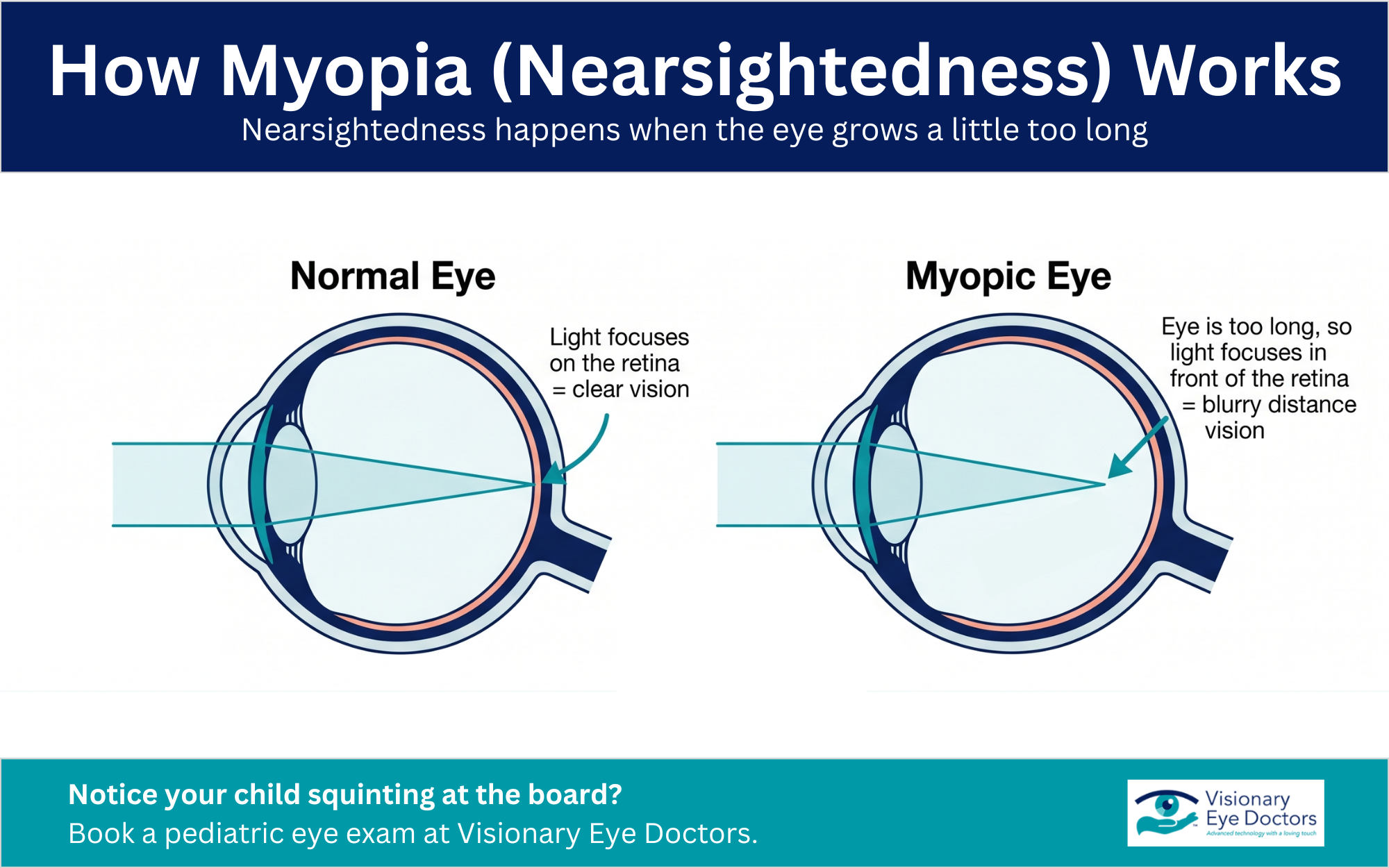
Myopia, also called nearsightedness, is a common refractive error. The eye grows a little too long, so light focuses in front of the retina instead of on it. That leads to blurry distance vision while close-up objects stay clear.
Childhood myopia is rising fast. Researchers project that nearly half of the world’s population could be nearsighted by 2050, and rates among children keep climbing.
The main risk factors for childhood myopia include:
- Genetics. A child with one or two nearsighted parents has a higher risk.
- Lifestyle. More time on near work and digital devices, plus less time outdoors, is linked to more myopia in younger children.
Why the Back-to-School Season Matters
Myopia tends to start and speed up during the school years. A child who becomes nearsighted early often ends up with a stronger prescription as they grow.
Back-to-school is a smart time for a regular eye exam because:
- Vision may have changed over summer break.
- Catching myopia early opens up more treatment options.
- A clear baseline lets your eye doctor track myopia progression at follow-up visits.
Signs Your Child May Be Nearsighted
Kids do not always say, “I can’t see.” Watch for these clues:
- Sitting very close to the TV or holding devices near the face
- Squinting to make out distant objects or the whiteboard
- Frequent headaches or eye rubbing
- Trouble in sports that require clear distance vision
- Slipping grades or losing interest in classroom work
If you notice any of these, schedule pediatric eye care. Active kids especially benefit from clear vision on the field and in the classroom.
The Risks of Letting Myopia Progress
Glasses correct vision, but needing stronger glasses every year can signal that the eye keeps growing. When progressive myopia continues into the teen years, it can reach high myopia. High myopia raises the lifetime risk of serious eye conditions, including:
- Retinal detachment
- Macular degeneration (the myopic form)
- Glaucoma and early cataracts
That is why slowing myopia matters. Myopia control helps protect your child’s long-term eye health while it sharpens their vision today. (Learn more about the early signs of glaucoma.)
Myopia Treatment Options That Slow Progression
Several evidence-based treatments can slow progression. Your eye doctor will match the option to your child’s age, prescription, and daily routine.
| Treatment | How It Works | Good to Know |
| Stellest lenses | FDA-authorized eyeglass lenses for kids 6 to 12 that look like regular glasses. A clear center keeps distance vision sharp, while tiny rings around the edge gently prompt the eye to slow its growth | A good fit for younger children and kids not ready for contacts; a two-year study showed about 71% slower myopia progression versus standard glasses |
| MiSight lenses | The first FDA-approved soft contact lenses for kids 8 to 12, these daily soft contact lenses correct blurry distance vision and slow eye growth | Single-use, so no cleaning is needed; research finds dual-focus soft lenses slow progression by roughly 50% to 60% over two to three years |
| Ortho-k lenses | Rigid lenses worn overnight gently reshape the cornea while your child sleeps | Your child goes glasses-free and contact-free during the day |
| Low-dose atropine | A nightly eye drop that helps slow myopia progression | Often most helpful in younger children; used with close monitoring |
| Multifocal soft contact lenses | A soft contact lens with a clear center for distance and outer rings that slow eye growth | A good match for many myopic children |
Each plan includes ongoing monitoring so your eye doctor can adjust as your child grows. No single option is right for every child, which is why a personalized fit matters.
Simple Habits That Support Your Child’s Vision
Daily habits will not replace treatment, but they help:
- Get outside. Time in natural daylight is linked to slower myopia in kids. Aim for outdoor play most days.
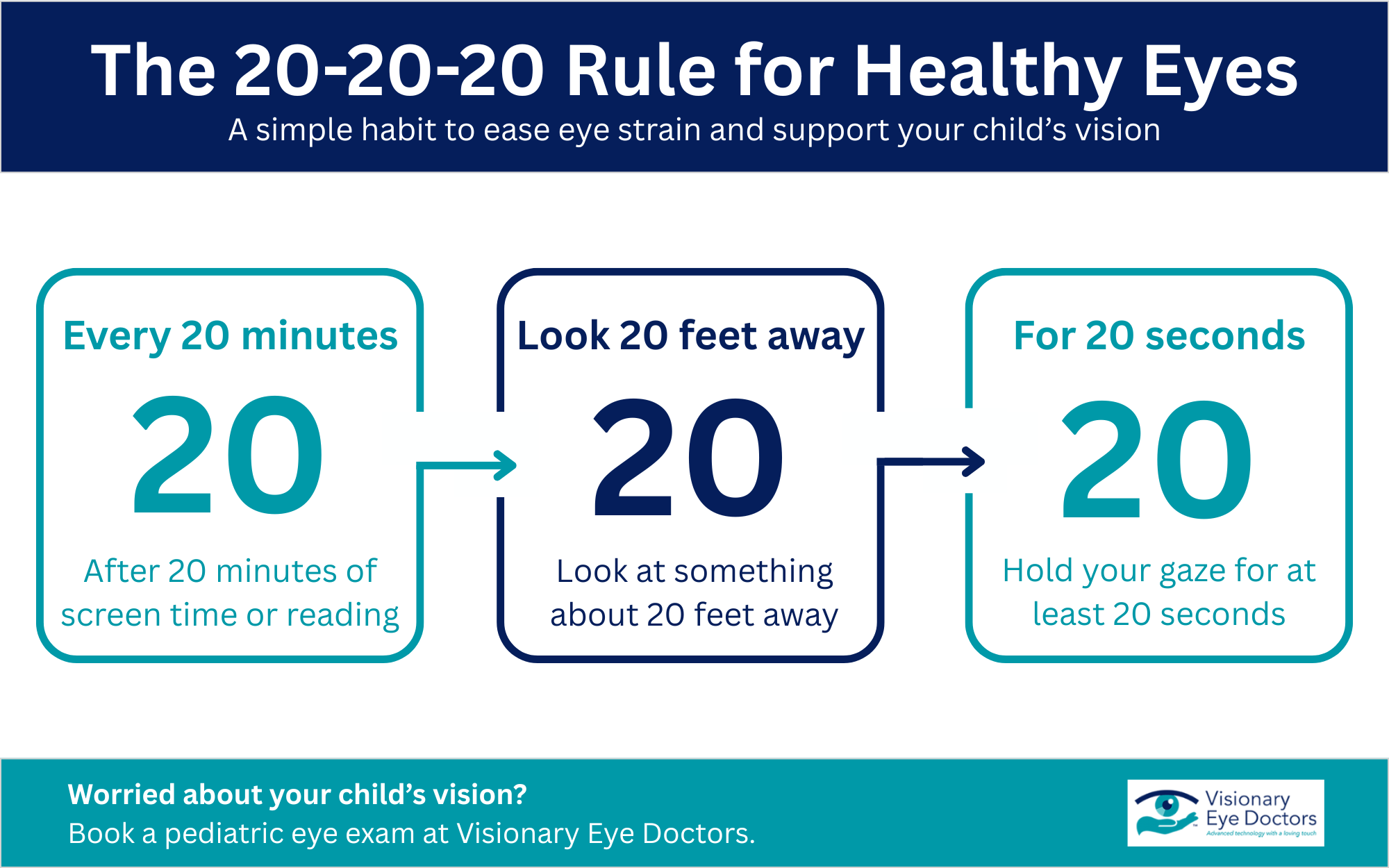
- Take regular breaks. Try the 20-20-20 rule: every 20 minutes, look at something about 20 feet away for 20 seconds.
- Manage screen time. Set limits on digital devices and keep screens at a comfortable distance.
- Use good lighting. Bright, even light takes strain off your child’s eyes during reading and homework.
What to Expect at a Myopia Management Visit
A myopia-focused exam goes beyond a standard vision check. Here is the typical path:
- Full eye exam. We measure the refractive error and check overall eye health.
- Myopia tracking. We may measure the length of the eye to see how fast it is changing.
- A personalized plan. We walk through treatment options and pick what fits your child’s needs.
- Follow-up visits. Short, regular checks show us what is working so we can fine-tune the plan.
Common Questions Parents Ask
At what age should myopia management start?
Sooner is better. Myopia control often works best in younger children, since they have the most eye growth still ahead of them. If your child’s prescription climbs each year, ask your eye doctor whether a plan makes sense now rather than waiting.
Will my child still need glasses?
Most likely, yes. These treatments slow myopia progression, but they do not reverse it. The aim is to keep the prescription from rising as fast, which lowers the chance of high myopia and the eye problems tied to it later in life.
Does myopia ever stop getting worse?
For most kids, myopia slows down and settles in the late teen years or early adulthood. Treatment during the school years helps limit how far it goes, which protects vision well into the young adult years.
Give Your Child a Clear Start to the School Year
Myopia in children rarely stands still, but you can slow it down. With an early eye exam and a plan built around your child, you protect their clear vision today and lower the risk of serious eye problems later in life. The back-to-school season is a natural time to begin.
At Visionary Eye Doctors, we offer myopia management for families across Washington, DC, and Maryland. Our team fits soft contact lenses, ortho-k lenses, and other myopia control options, then supports your child with caring, ongoing monitoring at every follow-up. We explain each step in plain language so you always know what comes next.
Give your child the gift of clear vision this school year. Book an appointment today and let us build a myopia management plan that grows with them.

