
Cataract Eye Surgery Recovery: What to Expect After Your Procedure
The Short Answer: Most people notice clearer vision within a few days of cataract surgery, get back to light daily activities within 24 hours, and reach full recovery in about four to six weeks. The recovery process tends to be smooth, and the blurry vision, mild discomfort, and light sensitivity you feel at first usually fade during the first week.
Cataract removal is one of the most common procedures in all of medicine. It is done as an outpatient procedure, and the surgery itself is pretty quick, taking only about 15 minutes for one eye. What trips people up is the part that comes after, and knowing what to expect makes the whole recovery period a lot less nerve-racking.
This guide walks through the recovery timeline day by day and what your vision actually looks like at each stage. It also covers the activities to put on hold, how to handle your eye drops, and the few warning signs that are worth a call to your eye doctor.
What Actually Happens During Cataract Surgery
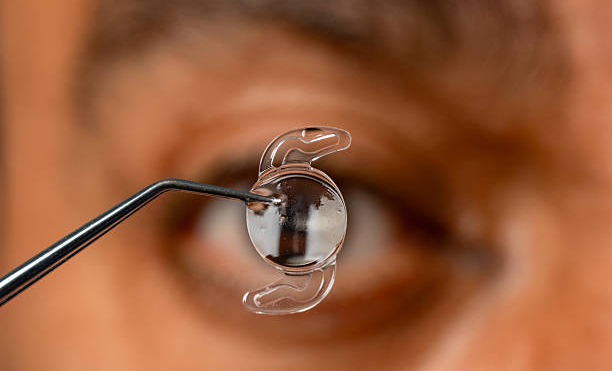
A cataract is a clouding of your eye’s natural lens. During surgery, the cataract surgeon takes out that cloudy lens and puts in a clear artificial lens called an intraocular lens, or IOL for short.
A few things about the procedure shape how your recovery goes:
- You get numbing drops or a local anesthetic, so you are awake the whole time, but feel next to nothing.
- Most patients head home the same day, usually within a couple of hours.
- Surgeons treat one eye at a time. If both eyes have cataracts, the second surgery typically gets scheduled a few weeks after the first.
- The new lens is permanent. It never needs cleaning, replacing, or upkeep once it is in.
Because there is no hospital stay, plenty of cataract patients assume they are done the moment they walk out the door. The truth is that your eye is still healing underneath, even once the discomfort is gone.
Cataract Surgery Recovery Timeline
No two people heal at the same speed, but most recoveries follow a similar path.
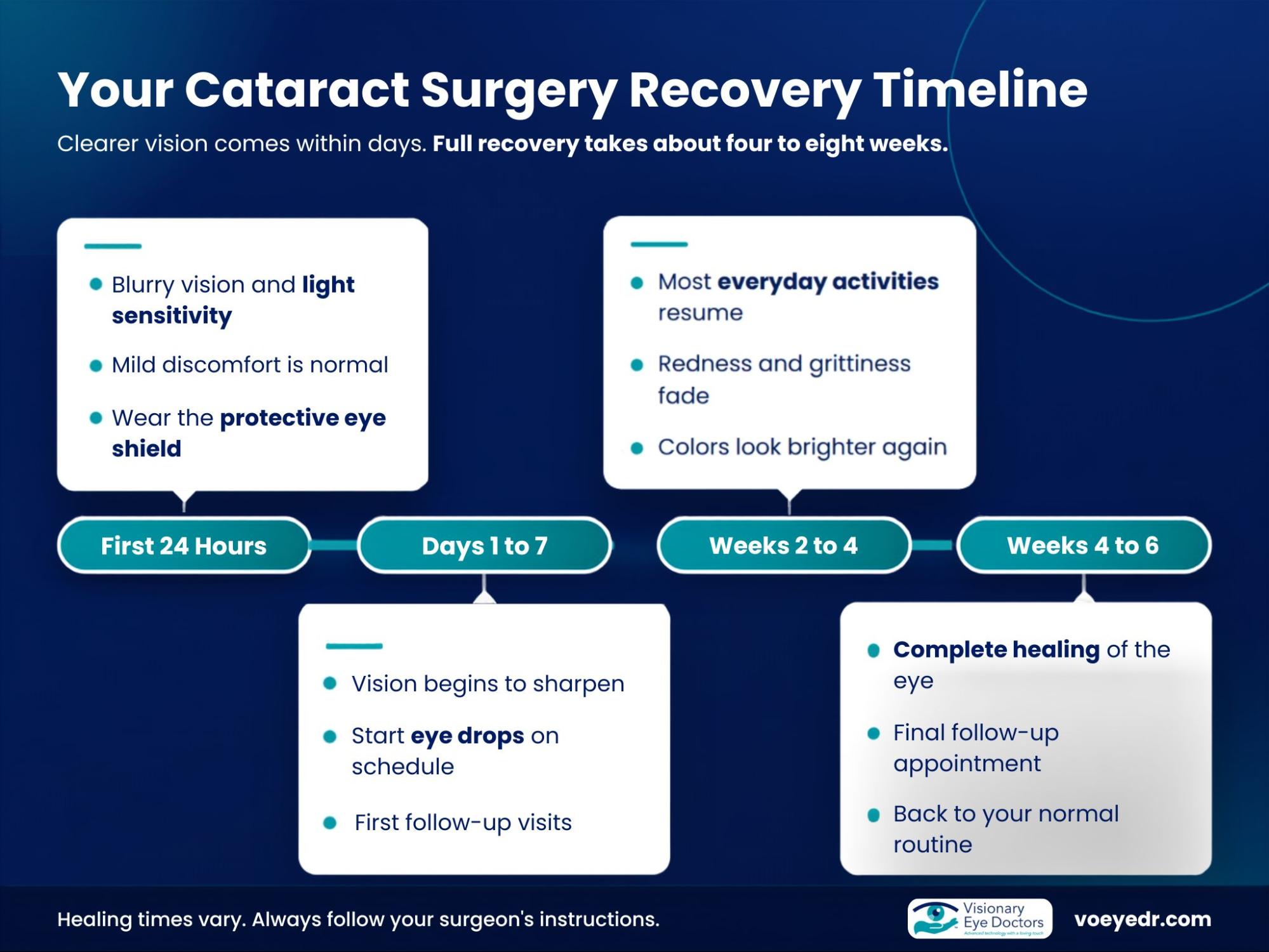
First 24 Hours
This is the day people ask about most. Expect some blurry vision, watering, mild discomfort, and light sensitivity while your eye settles around the new lens. You will need to wear a protective eye shield, take it easy, and have someone else drive you home.
Days 1 to 7
Vision improvement usually kicks in during the first week, and many cataract patients notice clearer vision within just a few days. Your eye drops start on a set schedule, the eye shield goes back on at night, and your first follow-up appointment checks that the healing process is on track.
Weeks 2 to 4
Most everyday activities come back into play here. Vision keeps sharpening through the artificial lens, the redness and grittiness fade, and your eye drops start to taper off.
Weeks 4 to 6
This is where complete healing happens. Cataract surgery recovery time runs about four to six weeks for most people, and at your final follow-up visit, the cataract surgeon confirms you are back to your normal routine. If you want glasses for reading or fine detail, this is when your prescription gets measured.
What Your Vision Will Look Like
The biggest surprise after eye surgery? Your vision is not perfect the second you sit up. Here is what to actually expect.
Blurry Vision Is Normal at First
Your eye is still a little swollen and getting used to the new lens. For a day or two, things can look cloudy, filmy, or slightly wavy. It clears up as the swelling goes down.
Light Sensitivity and Glare
Bright light can feel harsh for the first several days. Halos or starbursts around headlights at night are common early on and tend to fade on their own. A pair of sunglasses can be very helpful.
Colors Look Different
A cataract dims and yellows your view so gradually that you stop noticing it. Once the cataract is gone, people often say colors look richer, and whites finally look white. That is a sign of significant improvement, not something to worry about.
One Eye Sees Better Than the Other
If you have both eyes scheduled, the gap between them can feel strange for a few weeks. The differences balance out once the second eye is done.
Eye Drops and the Protective Shield
Two small things do most of the heavy lifting in your recovery.
Your Eye Drops
You will probably get two or three kinds of drops, usually an antibiotic and an anti-inflammatory. They fight infection and keep swelling down. A few pointers:
- Stick to the schedule in your surgeon’s instructions exactly, even on days your eye feels fine.
- Wash your hands before every dose.
- Give it about five minutes between different drops.
- Do not quit early. The drops usually taper over a few weeks.
Your Protective Eye Shield
The protective eye shield is there to stop you from rubbing or bumping your eye in your sleep. Most patients wear it at night for roughly the first week. Rubbing is the quickest way to set back a smooth recovery, and it is shockingly easy to do without realizing it.
What to Avoid During the Recovery Period
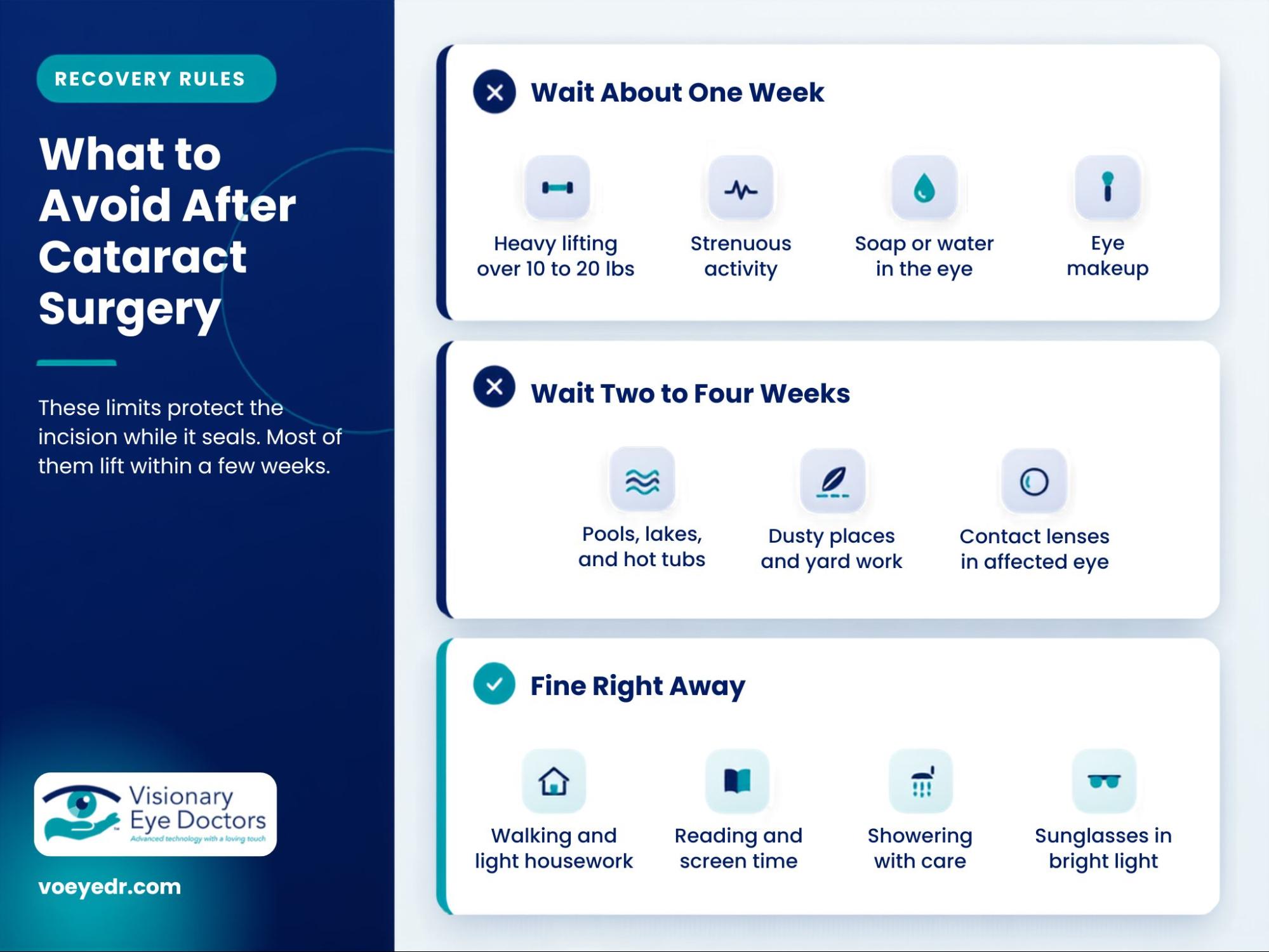
Hold off for about one week:
- Heavy lifting, meaning anything over 10 to 20 pounds
- Strenuous activity like running, weightlifting, or bending at the waist
- Getting soap, shampoo, or tap water straight in the eye
- Using eye makeup
Hold off for about two to four weeks:
- Swimming pools, lakes, and any hot tub, since they carry bacteria that can reach a healing eye
- Dusty or dirty settings such as yard work, sanding, or a construction site
- Avoid putting contact lenses in the treated eye until your eye doctor confirms the surface has healed
Fine right away:
- Walking, light housework, reading, screens, and most daily activities
- Showering, as long as water is not spraying directly into the eye
- Bending to grab something light off the floor
Your normal routine comes back faster than most people expect. These limits exist for one reason: to protect the incision while it seals.
Follow-Up Visits
Follow-up appointments are how your eye doctor makes sure the healing process is going the way it should.
- Day after surgery: vision is checked, and the pressure inside your eye is measured.
- One week later: swelling and the incision are looked over.
- Four to six weeks: a final check, plus a new glasses prescription if needed.
Be sure to attend every follow-up visit, even if your vision already feels great. Some issues, such as raised eye pressure, do not cause any symptoms early on.
When to Call Your Eye Doctor Right Away
Real complications are rare, but a few signs are worth a same-day call:
- A sudden loss of vision
- Pain that gets worse instead of better, or pain that over-the-counter medication will not touch
- A sudden burst of new floaters, or flashes of light
- A curtain or shadow drifting across your field of view
- Thick discharge or redness that keeps spreading
Mild grittiness, itching, watering, or a red spot on the white of the eye are all normal and fade on their own.
Your Path to Clearer Vision After Cataract Surgery
Cataract surgery recovery is short, predictable, and well worth the few weeks of care it asks of you. Expect some blurry vision and light sensitivity at first, stick to your eye drop schedule, wear the protective shield at night, skip the heavy lifting and hot tubs for a couple of weeks, and keep every follow-up appointment. Most people are back to everyday activities within a day and enjoying clear vision within a month.
The team at Visionary Eye Doctors has walked patients across Washington, DC, and Maryland through cataract diagnosis and surgery for decades, with a care plan shaped around your vision, your schedule, and your comfort at every step.
Thinking about your cataracts, or ready to start recovery on the right foot? Book your appointment today.
Frequently Asked Questions
Can cataracts come back?
No. Once the cataract is removed, it cannot grow back. What some people do develop, months or even years later, is a clouding of the membrane sitting behind the artificial lens. That gets fixed in a painless laser visit that takes just a few minutes.
Will I still need glasses?
Many patients see well at a distance without glasses and just reach for readers up close. Your lens choice plays a big part in this, so talk it through with your cataract surgeon before the day arrives.
What if I have macular degeneration or glaucoma?
Cataract surgery can still help, but how sharp your final vision gets depends on the health of your retina and optic nerve. Your eye doctor will walk you through realistic expectations before you schedule anything.
When can I wear eye makeup again?
Usually after about a week, once your surgeon confirms the eye has closed up and settled.

