

Macular Degeneration Test: How It Works and What Results Mean
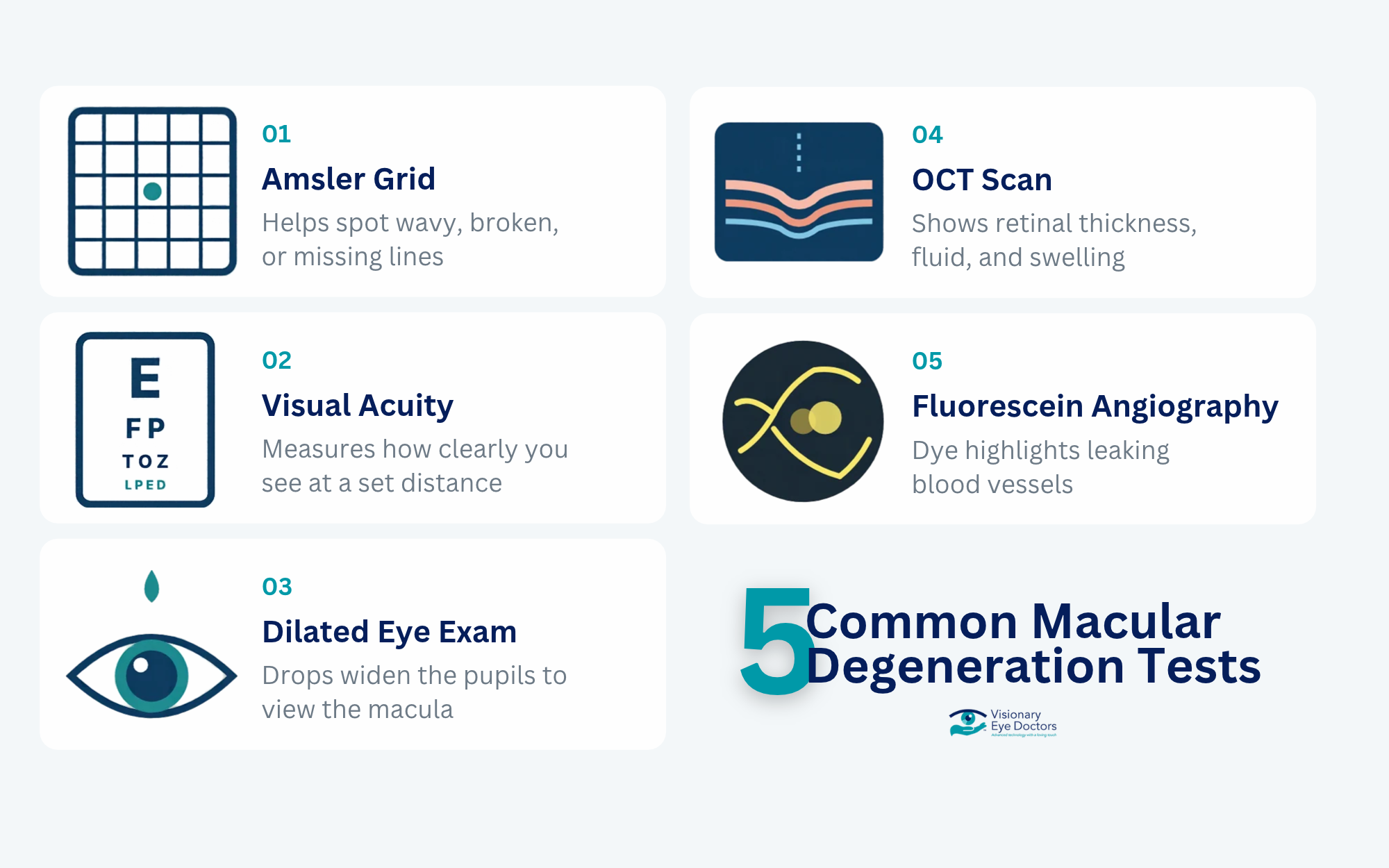
Macular degeneration testing is a set of quick, painless checks an eye doctor uses to study the macula, the center of the retina that controls your sharp central vision. The main tests include the Amsler grid, a dilated eye exam, optical coherence tomography (OCT), and sometimes fluorescein angiography.
Age-related macular degeneration (AMD) often begins with no warning signs. You can lose a little central vision without noticing it day to day, which is why testing matters long before symptoms appear. Many people only learn they have an eye disease once it has already progressed. Knowing what each macular degeneration test does, and how to read the results, helps you feel calmer and more prepared when you sit down with your eye doctor.
What Macular Degeneration Does to Your Vision
The macula is a small spot at the center of the retina, the light-sensitive retinal tissue at the back of the eye. It handles central vision you use to read, drive, and recognize faces. Macular degeneration happens when the macula breaks down, usually with age, which is why it mostly affects older adults.
The condition rarely causes full blindness. Instead, it tends to blur or darken the middle of your sight while your peripheral vision stays intact. Some people notice a blurry or dark blind spot in the center of what they are looking at.
Dry vs. Wet AMD
Dry AMD
Dry AMD is the most common form. Small yellow protein deposits called drusen build up under the retina, and the macula slowly thins over time. Central vision usually fades gradually in the early stages.
Wet AMD
Wet AMD is less common but more serious. Abnormal blood vessels grow under the retina and leak blood or fluid, which can scar the macula and cause faster vision loss. Spotting wet macular degeneration early gives you more treatment options.
Why Testing Early Makes a Difference
Macular degeneration is a leading cause of vision loss in older adults, and it often does its early damage quietly. Because the early stages can go unnoticed, a regular eye exam is the most reliable way to catch changes before they affect daily life. Early diagnosis lets your eye doctor start monitoring or treatment sooner, which can help slow the disease.
Macular Degeneration Tests and How Each One Works
Most of these tests are quick and comfortable, and your eye doctor may use several to get a full picture.
Amsler Grid Test
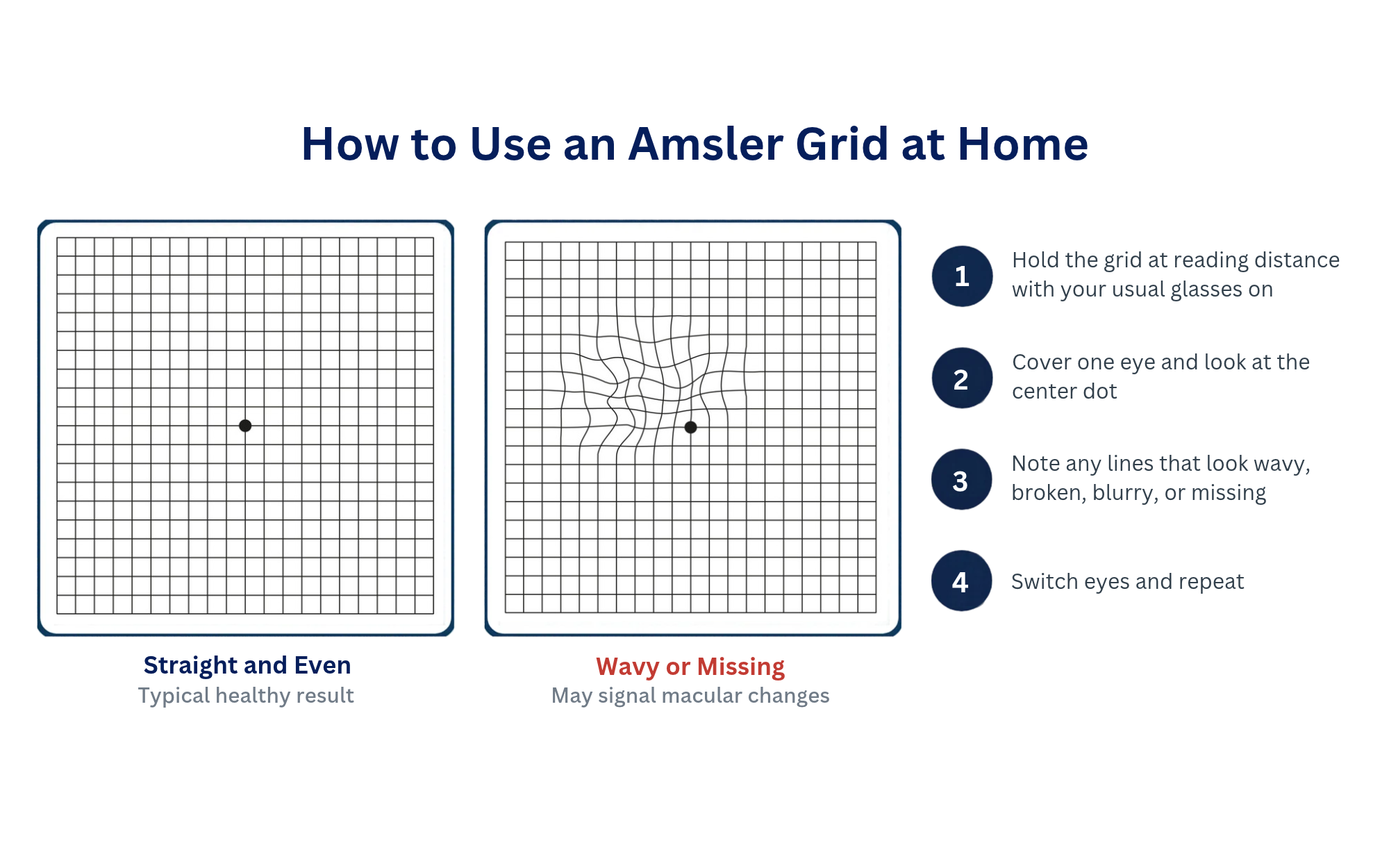
The Amsler grid test is simple enough to use at home, which makes it a handy diagnostic tool for watching your vision between visits. You cover one eye, look at the center dot, and note whether any lines look wavy, broken, blurry, or missing.
Visual Acuity Test
A visual acuity test uses a standard eye chart to measure how clearly you see at a set distance. A drop in visual acuity can be one of the first measurable signs of a vision problem, even if you already wear glasses or contact lenses.
Dilated Eye Exam
Your eye doctor places drops in your eyes to widen the pupils, then examines the retina, macula, optic nerve, and blood vessels. This view helps reveal drusen, swelling, or abnormal blood vessels that point to AMD.
Optical Coherence Tomography (OCT)
Optical coherence tomography is a non-invasive scan that captures a detailed cross-section of the retina. It measures the thickness of retinal tissue and can show fluid or swelling in the macula that the eye alone cannot see.
Fluorescein Angiography
If your eye doctor suspects wet AMD, a fluorescein angiogram can map the blood vessels in your eye. A yellow dye called fluorescein is injected into a vein in your arm, travels to the eye, and a special camera takes photos as the fluorescent dye passes through. Leaking or abnormal blood vessels light up clearly, which confirms wet macular degeneration.
Reading Your Macular Degeneration Test Results
Your results come together to show whether your macula is healthy and, if not, how far any changes have progressed. Here is a simple way to read the most common tests.
| Test | A normal result | What an abnormal result may mean |
| Amsler grid test | Straight lines stay straight and even | Wavy, broken, or missing lines suggest macular changes |
| Visual acuity test | Sharp, clear reading of the chart | Reduced sharpness may signal central vision loss |
| OCT | Even, healthy retinal thickness | Fluid, swelling, or drusen in the macula |
| Fluorescein angiography | Dye flows evenly with no leaks | Leaking abnormal blood vessels suggest wet AMD |
Vision Changes That Signal It Is Time to Get Tested
See an eye doctor if you notice any of these:
- Straight lines, like door frames or the vertical lines on a page, start to look wavy
- A blurry or dark blind spot near the center of your vision
- Trouble reading, driving, or recognizing faces
- Colors that look faded or washed out
- A need for brighter light to see fine detail
Peripheral vision usually stays normal with AMD, so changes tend to appear in the center first. Adults over 50, smokers, and anyone with a family history of the disease should be tested even without symptoms.
How Often Should You Be Tested?
Most adults over 50 benefit from a regular eye exam that checks for early signs of AMD. If you have a higher risk, your eye doctor may suggest more frequent visits. Using an Amsler grid at home between appointments adds another layer of monitoring, and your eye doctor will set the schedule that fits your eye health.
Treatment Options After a Diagnosis
Your results guide the next steps. Common treatment options include:
- Anti-VEGF injections that reduce leaking and slow abnormal blood vessel growth in wet AMD
- Laser treatment or photodynamic therapy to target leaking vessels in certain cases
- AREDS eye vitamins that may slow some intermediate and advanced dry AMD
- Lifestyle changes such as not smoking, eating leafy greens, and wearing UV-blocking sunglasses
Your eye doctor, often working with a retina specialist, will match the plan to your type and stage of AMD.
Stay Ahead of Vision Loss With Visionary Eye Doctors

Visionary Eye Doctors provides personalized eye care across Washington, DC, and Maryland, including macular degeneration testing, dilated eye exams, and ongoing monitoring with advanced diagnostic technology. Our team explains your results in plain language and builds a care plan around your vision and your lifestyle.
If you are over 50, have a family history of AMD, or have noticed wavy lines or a blurry spot in your central vision, now is a good time to act. Book an appointment with Visionary Eye Doctors today to test for macular degeneration and help protect your eye health for years to come.
Frequently Asked Questions
Is a macular degeneration test painful?
Most macular degeneration tests are painless. The Amsler grid, visual acuity test, dilated eye exam, and OCT cause no discomfort. Fluorescein angiography involves a small injection in your arm, similar to a routine blood draw.
Can I check for macular degeneration at home?
You can monitor your vision at home with an Amsler grid, which helps you notice wavy or missing lines between visits. It does not replace a full eye exam, though, so report any changes to your eye doctor right away.
Is macular degeneration hereditary?
Macular degeneration can run in families, and having a close relative with AMD raises your risk. Genetics is one factor among several, including age, smoking, and diet. If AMD is in your family, tell your eye doctor so they can monitor your vision more closely.
Does macular degeneration affect peripheral vision?
Macular degeneration mainly affects central vision, while peripheral vision usually stays intact. That is why some people keep their side vision even as the center becomes blurry. Regular testing helps track these changes over time.
Can vision be restored after macular degeneration?
Vision already lost to macular degeneration usually cannot be fully restored. Treatment focuses on slowing the disease and protecting the central vision you still have, and in some cases of wet AMD, anti-VEGF injections can improve vision. Catching AMD early gives you the best chance to keep more of your sight.