
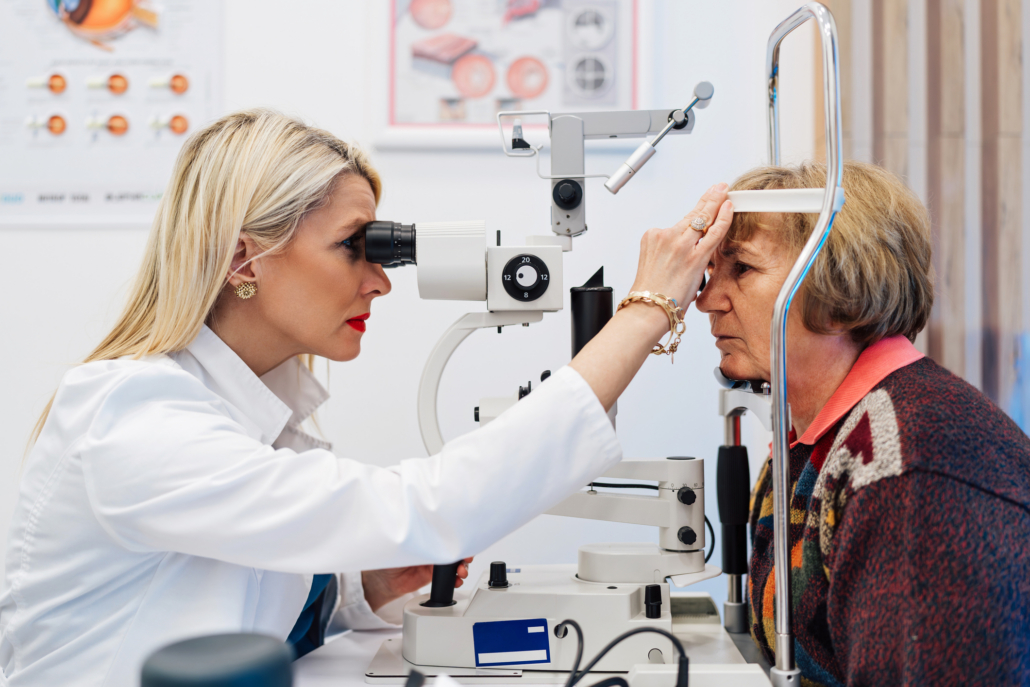
The First Symptoms of Glaucoma: What to Watch For
The Short Answer: Glaucoma is a group of eye diseases that cause progressive damage to the optic nerve, the vital connection that sends visual information from your eyes to your brain. In most cases, this damage is associated with elevated intraocular pressure (the pressure inside your eye). The first symptoms of glaucoma can include, but are not limited to, blind spots in peripheral vision, sudden severe eye pain with blurred vision, halos around lights that come and go, and cloudy or enlarged eyes in an infant.
The good news is that early detection works. Regular eye exams can catch glaucoma in its earliest stages, before any vision loss happens. Below you will find what glaucoma does to your eyes, which early signs matter, who is at higher risk, and what to expect at your appointment.
What Glaucoma Does to Your Eyes
Your eye constantly produces a clear fluid called aqueous humor. This fluid nourishes the eye and maintains its shape. It normally drains through the trabecular meshwork at the drainage angle where the iris meets the cornea. When this drainage system doesn’t work properly, fluid builds up and increases pressure, potentially damaging the optic nerve over time.
Optic nerve damage cannot be reversed, so catching and stopping it early is very important. Because high eye pressure typically causes no pain and no obvious symptoms, it can be difficult to catch since you cannot feel it happening. If left untreated, glaucoma can lead to permanent vision loss, making it the second leading cause of blindness worldwide. However, with early detection and proper treatment, most people can preserve their vision for years to come.
Types of Glaucoma and How Their Symptoms Differ
Open-Angle Glaucoma
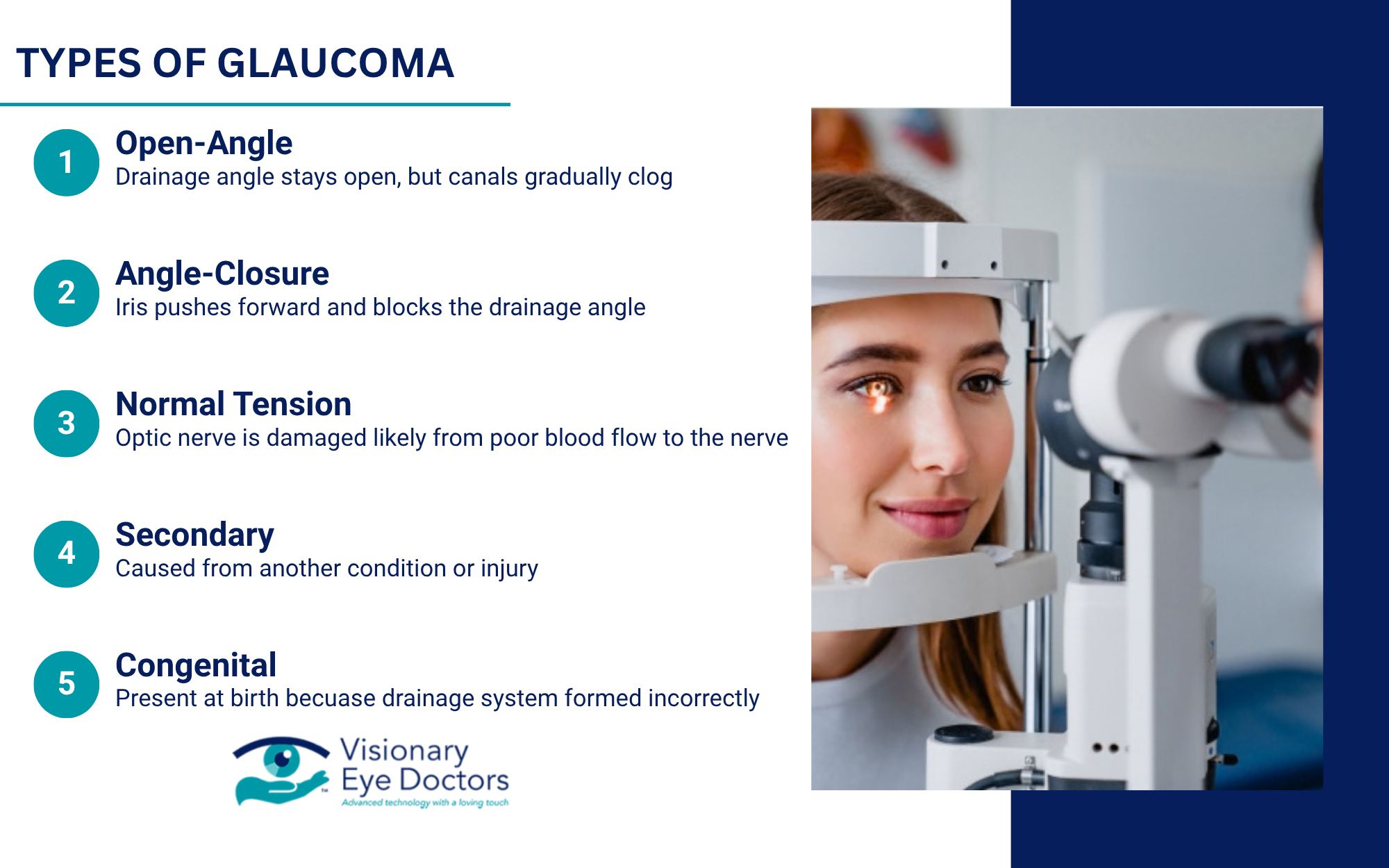
Open-angle glaucoma makes up the large majority of cases in the United States. The drainage angle stays open, but the drainage canals clog gradually, and eye pressure creeps up over months or years. Because the change is so slow, this type has no early symptoms at all. More than 4 million American adults have glaucoma, and about half do not know it.
Angle-Closure Glaucoma
Angle-Closure glaucoma occurs when the iris pushes forward and blocks the drainage angle. If the block is sudden and complete, pressure spikes within hours. This is acute angle-closure glaucoma, and it comes with noticeable symptoms that demand immediate medical attention. A slower, chronic form also exists and can go unnoticed, like open-angle glaucoma.
Chronic Angle-Closure Glaucoma
Chronic angle-closure glaucoma develops more gradually as the iris slowly blocks the drainage angle over time. Some people may experience intermittent episodes where the angle temporarily closes, causing brief symptoms that resolve on their own before a full acute attack occurs.
Other Types of Glaucoma to be Aware Of
- Normal tension glaucoma: Occurs when the optic nerve is damaged even though eye pressure tests as normal, likely due to poor blood flow to the nerve.
- Secondary glaucoma: Glaucoma that is caused by another condition, such as an eye injury, inflammation, or long-term steroid use.
- Congenital glaucoma: Present at birth because the drainage system did not form correctly. Babies may have cloudy eyes, extra blinking, or watery eyes without crying.
Early Symptoms of Glaucoma to Watch For
Open-Angle Glaucoma: A Silent Threat
Because there are no early symptoms, the first signs usually appear after significant damage has already occurred. Watch for:
- Patchy blind spots in your side vision, often in both eyes
- Trouble seeing objects beside you while looking straight ahead
- Bumping into things or missing a step more often than usual
- Needing more light to read or see clearly
- Tunnel vision in advanced stages, where only central vision remains
Acute Angle-Closure Glaucoma: A Medical Emergency
These symptoms come on fast and together. Go to the emergency room or call an eye doctor right away if you notice:
- Severe eye pain, often with a pounding headache
- Sudden blurry vision or a sharp drop in vision
- Halos or rainbow-colored rings around lights
- A red eye that feels hard to the touch
- Nausea or vomiting along with eye pain
Every hour matters. The American Academy of Ophthalmology calls an acute attack a true eye emergency that can cause permanent vision loss without prompt treatment.
Subtle Warning Signs That Deserve a Visit
Some people have brief episodes before a full attack, or mild changes in the early stages of other types. Schedule an eye exam if you notice:
- Occasional blurred vision that clears on its own, especially in dim light
- Mild eye aches or headaches that come and go in the evening
- Halos around lights at night
- Vision that seems fine in the center but “off” at the edges
| Symptom | What It May Mean | What To Do |
| Blind spots in peripheral vision | Open-angle glaucoma, often advanced | Schedule an eye exam soon |
| Sudden severe eye pain with blurred vision | Acute angle-closure glaucoma | Seek emergency care now |
| Halos around lights that come and go | Brief angle closure or rising eye pressure | Book an exam within days |
| Cloudy or enlarged eyes in an infant | Congenital glaucoma | See a pediatric eye doctor right away |
Who Is at Higher Risk of Glaucoma?
Anyone can develop glaucoma, but each risk factor below raises the odds. If two or more apply to you, ask your eye doctor how often you should be checked.
- Age 60 and older, or age 40 and older for Black patients, who face a six- to eight-times higher risk
- Family history, which can raise your risk as much as 10 times if a sibling has glaucoma
- Black, Hispanic, or Asian heritage (Asian patients carry a higher risk of angle closure)
- Diabetes, high blood pressure, or heart disease
- Severe nearsightedness or farsightedness
- Thin corneas or eye pressure above the normal range
- Past eye injury or eye surgery
- Long-term use of steroid medications
How Visionary Eye Doctors Detect Glaucoma
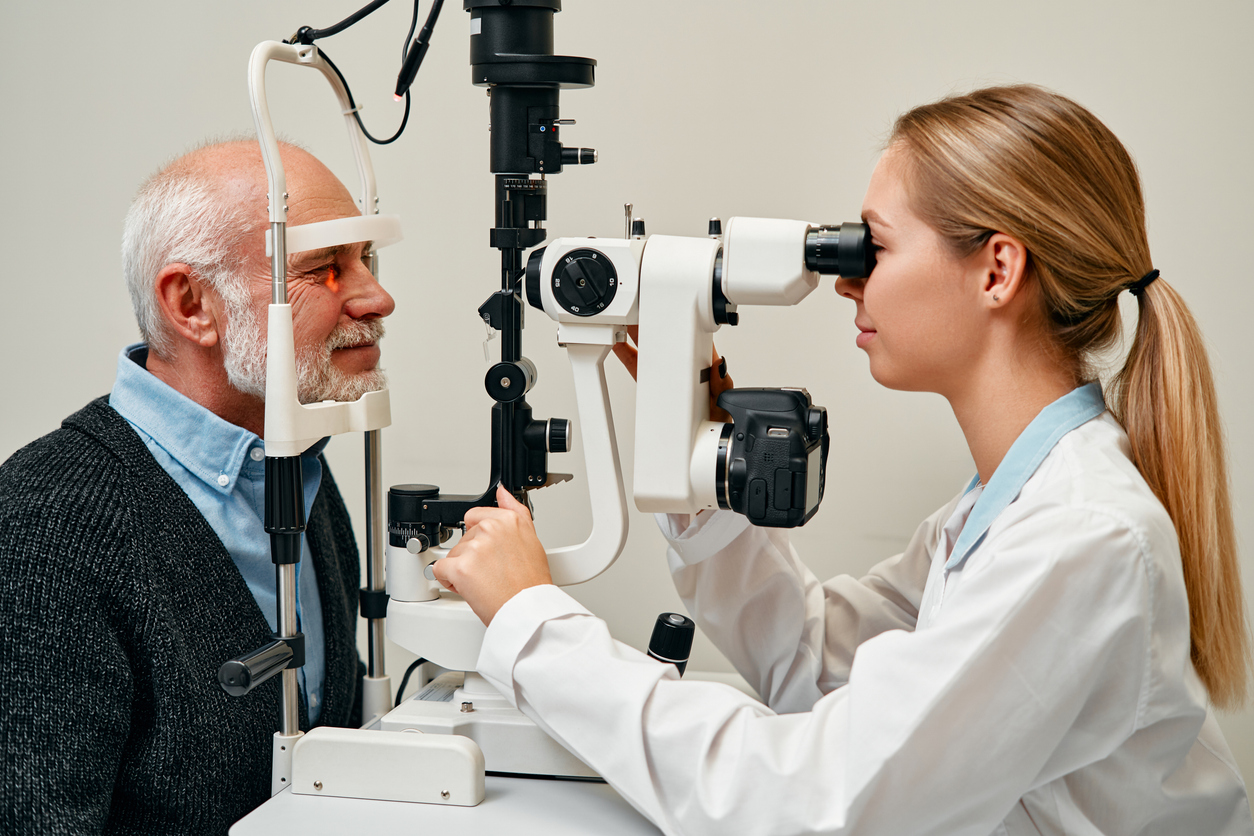
A comprehensive eye exam with dilation looks at both the pressure in your eye and the health of the optic nerve itself. The tests are quick and painless
What’s included in glaucoma testing
- Tonometry measures your eye pressure
- Ophthalmoscopy examines the optic nerve for early signs of damage
- Visual field testing maps your side vision to find blind spots you cannot feel
Glaucoma Treatment Options
Glaucoma cannot be cured, but it can almost always be controlled. Treatment options work by lowering eye pressure:
- Glaucoma Eye Drops: Prescription eye drops, usually the first step, reduce fluid production or improve drainage
- Selective Laser Trabeculoplasty (SLT): Laser treatment opens up the drainage system for open-angle glaucoma or creates a small opening in the iris for angle-closure glaucoma
- Micro-Invasive Glaucoma Surgery (MIGS): Surgery builds a new drainage path when drops and lasers are not enough
Started early, treatment preserves the vision you still have for decades, which is why early detection matters.
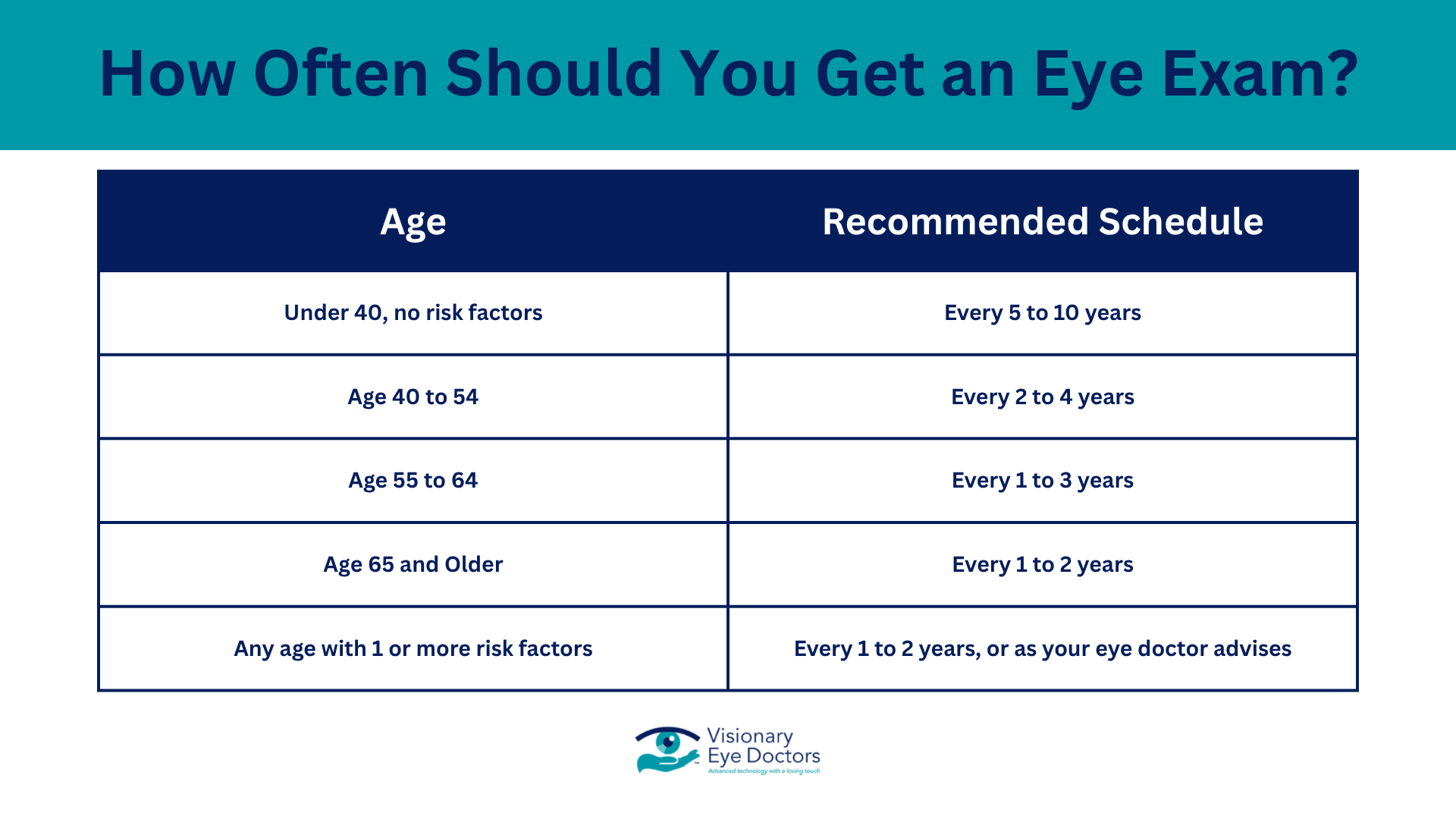
How Often Should You Get an Eye Exam?
The American Academy of Ophthalmology recommends this eye exam schedule for adults with no detectable symptoms.
Additional steps you can take to protect your eye health are:
- Manage your overall health by controlling diabetes and blood pressure, which supports good eye health.
- Protect your eyes from injury by wearing protective eyewear during sports and activities.
- Follow your treatment plan consistently if you’ve been diagnosed with glaucoma, even if you feel fine.
Protect Your Vision with Visionary Eye Doctors
At Visionary Eye Doctors, glaucoma care is one of our specialties. Our team uses advanced imaging to spot nerve changes years before you would notice them, and we build a treatment plan around your eyes, your health, and your daily life. With offices in Washington, DC, and across Maryland, care is close to home. You can read more about treating glaucoma or explore our other eye care services.
If you are over 40, have a family history, or simply cannot remember your last eye exam, now is the time. Book an appointment online today, and if you are having severe eye pain with blurred vision, skip the booking and call us or go to the nearest emergency room.

